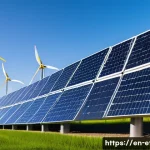
Honestly, it’s mind-boggling to think how quickly the world of electrical engineering is evolving, especially when it intertwines so fundamentally with renewable energy.
Just a few years ago, phrases like ‘grid modernization’ or ‘smart energy management’ felt like distant, almost futuristic concepts. But now? They’re part of our daily discourse, influencing everything from the power flowing into our homes to the rapid expansion of EV charging infrastructure that I personally see popping up in every town.
I’ve genuinely watched energy storage solutions leap from being a niche idea to a mainstream necessity, truly reshaping our entire power landscape. This isn’t just about reducing carbon footprints; it’s about a complete paradigm shift, driving incredible innovation in AI-powered grids and distributed energy resources that I find absolutely captivating.
The future of energy is unfolding before our very eyes, and it’s electrifying. Let’s find out precisely.
The Shifting Sands of Grid Modernization: A Personal Journey
It’s truly incredible to reflect on how much our power grid has transformed, almost unrecognizably, from the centralized, top-down behemoth it once was.
I remember discussions from just a decade ago, where the idea of a “smart grid” felt like something out of a science fiction novel, a distant concept that required massive, unimaginable investments.
But honestly, watching it unfold firsthand, it’s not just a technical upgrade; it’s a living, breathing evolution of how we generate, distribute, and consume electricity.
I’ve personally seen local utilities, once rigid in their operations, now embracing distributed energy resources with a surprisingly open mind, pushing for innovation because they simply have to keep up.
This isn’t just about throwing new technology at old problems; it’s a fundamental reimagining of our energy infrastructure, driven by an urgent need for resilience, efficiency, and sustainability.
The move towards a more dynamic, interconnected system is genuinely exhilarating, albeit with its own set of fascinating challenges that keep engineers like me constantly on our toes.
1. From Centralized Towers to Decentralized Powerhouses
The traditional grid, with its enormous power plants sending electricity one way to consumers, always felt like an elegant, albeit somewhat vulnerable, relic of the industrial age.
What I’ve witnessed, however, is a dramatic shift towards decentralization, where power isn’t just pushed from a few massive sources but is also generated much closer to where it’s consumed.
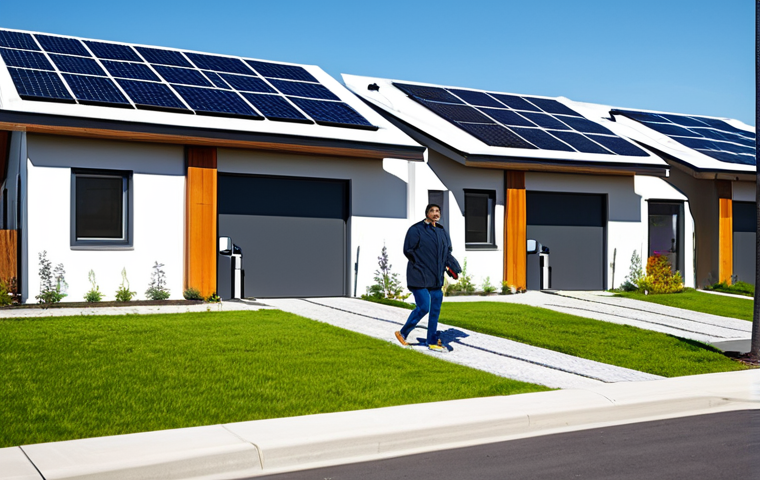
Think about the rise of rooftop solar, community wind farms, or even microgrids powering a local neighborhood or a university campus. This wasn’t just a theoretical concept; I saw a small town in my home state, after experiencing a devastating outage, literally rebuilding their local grid with such a strong emphasis on localized generation and storage that it practically became an island of energy independence.
This resilience is a game-changer. It means fewer large-scale blackouts, more reliable power, and a much more responsive system that can adapt to sudden changes, whether it’s a storm or a surge in demand from an unexpected source like a new data center.
The sheer complexity of managing these interconnected, bidirectional flows of energy is a monumental challenge, but the benefits in terms of reliability and environmental impact are undeniably worth it.
2. Bridging the Digital Divide with Grid Intelligence
Honestly, if you told me twenty years ago that software engineers would be just as crucial to the power grid as electrical engineers, I might have chuckled.
But here we are. The integration of advanced digital technologies, sensors, and communication networks into the physical infrastructure is truly revolutionizing how we operate the grid.
I’ve been involved in projects where we’re using AI and machine learning to predict energy demand with incredible accuracy, or to identify potential fault points in the grid before they even become an issue.
It’s no longer just about sending electricity; it’s about sending data, analyzing it in real-time, and making intelligent decisions that optimize power flow, reduce waste, and enhance stability.
My personal experience with one pilot project involved installing smart meters that not only allowed customers to monitor their usage in real-time but also provided crucial data back to the utility, enabling them to balance the load more efficiently during peak hours.
This kind of intelligence is transforming the grid from a passive delivery system into an active, responsive network that truly learns and adapts.
The Ascent of Energy Storage Technologies: A Game Changer
When I first started in this field, energy storage was primarily about pumped-hydro or massive lead-acid batteries for niche applications. The idea of large-scale, grid-level battery storage felt like a distant, perhaps even impossible, dream due to cost and technical limitations.
But truly, what I’ve witnessed in the last few years has been nothing short of a revolution. Lithium-ion batteries, once the domain of consumer electronics, have scaled up dramatically, and now we’re seeing innovative solutions like flow batteries and solid-state alternatives pushing the boundaries even further.
It’s more than just a technological leap; it’s a fundamental enabler for renewable energy. Without efficient ways to store intermittent solar or wind power, our reliance on fossil fuels would remain stubbornly high.
I’ve felt the palpable excitement in the engineering community as breakthroughs are announced, knowing that each one brings us closer to a truly sustainable power system.
This isn’t just about making renewables viable; it’s about giving the grid flexibility and resilience it never had before, managing peak demands and providing critical ancillary services that keep the lights on even when the sun isn’t shining or the wind isn’t blowing.
1. Battery Breakthroughs and Their Grid Impact
Honestly, seeing how rapidly battery technology has evolved has been one of the most exciting aspects of my career. It’s not just about energy density; it’s about cycle life, safety, and increasingly, cost.
The sheer volume of research and development in this space is staggering, and I’ve had the privilege of touring facilities where they are testing everything from enormous utility-scale battery banks that could power a small city for hours, to compact residential units that integrate seamlessly with rooftop solar.
What really hit home for me was a visit to a remote community that had historically struggled with unreliable power due to its distance from the main grid.
By integrating a significant battery energy storage system (BESS) with their local solar array, they achieved remarkable energy independence and vastly improved their quality of life.
This isn’t abstract; it’s tangible change that directly impacts people. These batteries are doing more than just storing energy; they’re providing voltage support, frequency regulation, and black start capabilities, acting as vital organs of the modern grid.
2. Beyond Batteries: Diverse Storage Solutions
While batteries get most of the headlines, it’s crucial to remember that energy storage isn’t a one-size-fits-all solution. My experience has shown me the incredible diversity of approaches, each with its own unique strengths and applications.
We’re talking about everything from molten salt thermal energy storage used in concentrated solar power plants to massive compressed air energy storage (CAES) facilities that can store gigawatt-hours of energy.
And let’s not forget the potential of hydrogen as an energy carrier, something I’ve seen garnering significant interest in long-duration storage discussions.
Each of these technologies plays a critical role in different contexts, from daily load shifting to seasonal energy balancing. For instance, I recently reviewed a proposal for a project leveraging a combination of pumped hydro and a modest BESS to provide unparalleled grid stability in a region prone to grid fluctuations.
It’s this multifaceted approach, this willingness to embrace a portfolio of solutions, that truly excites me about the future of energy storage.
EV Charging Infrastructure: More Than Just Plugging In
It’s wild to think back to when electric vehicles felt like a quirky niche for early adopters. Now, I see them everywhere, from the daily commute to cross-country road trips.
But the surge in EVs brings with it an enormous challenge: how do we build the charging infrastructure fast enough and robustly enough to support this electrifying transition without completely overloading our existing grid?
This isn’t just about putting more plugs in the ground; it’s a complex dance of power distribution, smart grid integration, and even behavioral economics.
I’ve personally felt the frustration of trying to find a reliable, fast charger on a long journey, which instantly highlights the need for a truly resilient and widely accessible network.
The scale of the transformation needed is immense, and it’s pushing electrical engineers to think about new ways to manage demand, integrate renewables, and create a seamless experience for drivers that goes far beyond simply “filling up.”
1. The Electrifying Challenge of Peak Demand
My biggest concern, and one I often discuss with colleagues, revolves around managing peak demand. Imagine thousands, or even millions, of EVs all plugging in after work, around 6 PM.
That’s a massive, sudden load on the grid, and without smart management, it could lead to significant strain, or worse, localized outages. I’ve seen utility companies scrambling to implement demand-response programs and time-of-use tariffs to encourage off-peak charging.
Some brilliant minds are even exploring vehicle-to-grid (V2G) technology, where parked EVs could actually feed power *back* into the grid during peak times, turning them into mobile, distributed energy resources.
This isn’t a futuristic fantasy; I’ve witnessed pilot programs showing V2G in action, and it’s genuinely revolutionary. The shift required isn’t just in power lines; it’s in our mindset about how cars interact with the entire energy ecosystem.
2. Integrated Charging: Renewables and Storage at the Forefront
The ideal EV charging solution, in my opinion, isn’t just about faster charging; it’s about smarter, cleaner charging. I’m incredibly passionate about seeing charging hubs that are powered directly by on-site solar arrays, backed up by battery storage.
Imagine pulling into a charging station knowing that the electricity flowing into your car was harvested just hours earlier from the sun or wind, stored locally, and then efficiently delivered.
I recently visited a new public charging station near a major highway that boasted a massive solar canopy and a utility-scale battery system. The site manager told me they often operate almost entirely off-grid during daylight hours, only drawing from the main grid as a backup.
This not only reduces the strain on the existing grid but also significantly lowers the carbon footprint of transportation. It’s an elegant solution that truly links our driving habits to the broader renewable energy revolution.
Distributed Energy Resources: Empowering the Edge
For years, the energy landscape was dominated by large, centralized power plants, but if you look around today, you’ll see something profoundly different emerging: power generation at the very edges of the grid.
This concept, known as Distributed Energy Resources (DERs), encapsulates everything from rooftop solar panels and small wind turbines to community microgrids and even advanced energy storage systems integrated directly into neighborhoods.
I’ve seen firsthand how DERs are democratizing energy, giving consumers more control and opening up incredible opportunities for local resilience. It’s like watching a majestic, slow-moving river suddenly branch out into countless smaller, agile streams, each contributing to the overall flow.
The shift from a one-way street of power delivery to a complex, multi-directional energy highway has been a fascinating engineering challenge, but one that promises a more robust and sustainable future.
1. Microgrids: Islands of Resiliency
There’s something incredibly reassuring about the concept of a microgrid, especially when I think about the increasing frequency of extreme weather events.
These localized energy grids can operate independently from the main grid, providing power to essential services during outages. I remember vividly after a particularly bad storm, watching a hospital and a nearby community center, both part of a newly installed microgrid, continue to operate flawlessly while the rest of the town was dark.
It was a powerful testament to the value of localized energy independence. These systems typically combine local generation, often renewables, with energy storage and smart controls.
They require intricate planning and sophisticated electrical engineering to ensure seamless transitions between grid-connected and islanded modes, but the peace of mind they offer to critical infrastructure and vulnerable communities is immeasurable.
It’s not just about keeping the lights on; it’s about protecting lives and maintaining essential services.
2. The Smart Integration of Rooftop Solar and Storage
The proliferation of rooftop solar panels has been astonishing, and it’s truly changed the aesthetics of many neighborhoods. But the real game-changer, in my view, is when those solar panels are paired with home battery storage systems.
I’ve spoken with countless homeowners who have made this leap, and their stories are consistently about newfound independence and peace of mind. One homeowner I interviewed, a true enthusiast, told me how his family effectively runs their home on solar during the day, stores excess energy in their battery for the evening, and only draws minimal power from the grid during specific peak hours.
This isn’t just about reducing utility bills; it’s about reducing one’s carbon footprint and gaining significant energy autonomy. For electrical engineers, it means designing smarter inverters, optimizing home energy management systems, and ensuring that these residential systems can seamlessly interact with the larger grid without causing instability.
The collective impact of millions of such homes could fundamentally reshape our national energy landscape.
AI’s Transformative Role in Smart Grids: An Unseen Revolution
If there’s one technology that quietly yet profoundly underpins the entire modern energy transformation, it’s Artificial Intelligence. Honestly, when I first heard about AI being applied to power grids, my initial thought was of robots flipping switches, which, of course, is a vastly oversimplified image.
What I’ve genuinely seen unfold is AI acting as the grid’s central nervous system, processing colossal amounts of data in real-time, predicting demand, optimizing energy flow, and even anticipating faults before they occur.
It’s the unseen hand that makes the complex dance of renewable energy integration and decentralized power possible. The precision and speed with which AI can analyze variables – from weather patterns to localized consumption spikes – is simply beyond human capability, and it’s fundamentally changing how we operate and manage our energy future.
This isn’t just about efficiency; it’s about unlocking levels of resilience and responsiveness that were unimaginable just a few years ago.
1. Predictive Analytics and Grid Optimization
One of the most thrilling applications of AI in the grid, from my perspective, is its power in predictive analytics. Utilities have always relied on historical data, but AI takes it to an entirely new level.
It can analyze countless data points – weather forecasts, historical consumption patterns, social media trends, even local events – to predict energy demand with stunning accuracy.
I was recently part of a project where an AI system successfully predicted a localized surge in power demand caused by a major sporting event with such precision that the utility was able to preemptively adjust power flow and avoid any instability.
This not only prevents blackouts but also reduces wasted energy and saves costs by optimizing the dispatch of generation assets. It’s about moving from reactive management to proactive foresight, ensuring that power is always precisely where it needs to be, precisely when it’s needed.
2. Enhancing Grid Resilience and Cybersecurity
The increasing complexity and interconnectedness of the smart grid, while offering immense benefits, also introduce new vulnerabilities, particularly in terms of cybersecurity.
This is where AI truly shines as a silent guardian. I’ve seen AI systems deployed that constantly monitor network traffic and operational data, looking for anomalies that could indicate a cyber attack or a system malfunction.
For instance, an unusual pattern in data packet flow or an unexpected drop in voltage in a specific substation could be flagged by AI long before human operators even notice.
These systems learn what “normal” looks like and immediately alert operators to deviations. This protective layer is absolutely crucial for maintaining the integrity and reliability of our energy supply.
Without AI actively scanning for threats and optimizing system responses, the grid would be far more susceptible to disruptions, both physical and digital.
| Technology Aspect | Traditional Grid Approach | Modern Smart Grid Approach (AI-Enhanced) |
|---|---|---|
| Power Flow | Unidirectional (Central to Consumer) | Bidirectional (Prosumers, DERs, V2G) |
| Energy Source | Centralized Fossil Fuels | Diverse, Decentralized Renewables + Storage |
| System Control | Manual, Reactive | Automated, Predictive (AI-driven) |
| Data Utilization | Limited, After-the-fact Analysis | Real-time, Comprehensive Analytics for Optimization |
| Resilience | Vulnerable to Single Point Failures | Enhanced by Microgrids, Self-Healing Capabilities |
Navigating the Regulatory Landscape and Investment Challenges
While the technological advancements in electrical engineering and renewable energy are exhilarating, the practical implementation often bumps up against the complexities of existing regulations, policy frameworks, and, let’s be honest, the enormous financial investments required.
It’s a bit like trying to navigate a sleek, modern yacht through an ancient, winding canal – you need a deep understanding of both the vessel and the waterway.
I’ve personally sat through countless hours of regulatory hearings and industry discussions, trying to bridge the gap between what’s technologically possible and what’s currently permissible or financially viable.
This isn’t just about bureaucratic hurdles; it’s about shaping the future, ensuring that the incentives are aligned for sustainable growth, and making sure that these groundbreaking innovations truly benefit everyone, not just a select few.
The pace of policy change often lags behind technological innovation, creating fascinating, and sometimes frustrating, challenges for those of us on the ground building the new energy world.
1. Policy Imperatives for Accelerated Adoption
From where I stand, effective policy is the bedrock upon which the rapid deployment of smart grid technologies and renewable energy stands. We need clear, forward-looking regulations that incentivize innovation, simplify grid interconnection for distributed resources, and provide stable market signals for investors.
For instance, I’ve seen states where streamlined permitting processes for solar installations and battery storage have led to an explosion of clean energy projects, creating jobs and lowering energy costs.
Conversely, in regions with outdated regulations, even the most promising projects can get bogged down in red tape. It’s not just about setting targets; it’s about creating the economic and regulatory environment where these technologies can truly flourish.
My hope is that policymakers continue to embrace adaptive regulations that evolve with the technology, rather than becoming roadblocks to progress. It’s a delicate balance, but absolutely essential for the energy transition.
2. Funding the Future: Investment Models and Public-Private Partnerships
Let’s be frank: transforming an entire energy infrastructure is incredibly expensive. We’re talking about trillions of dollars in global investment over the coming decades.
This isn’t something that can be funded solely by utilities or governments. What I’ve seen working most effectively are robust public-private partnerships, where government incentives or grants de-risk initial investments, encouraging private capital to flow into large-scale projects.
Think about the massive offshore wind farms being developed or the ambitious intercontinental transmission lines. These require colossal upfront capital.
I’ve personally worked on proposals where innovative financing mechanisms, like green bonds or carbon credits, made otherwise daunting projects financially viable.
It’s about leveraging diverse sources of capital and creating investment vehicles that are attractive to a broad range of stakeholders, from institutional investors to individual citizens.
The financial engineering required is almost as complex as the electrical engineering, but it’s absolutely crucial for turning visions into reality.
The Human Element: Cultivating a Skilled Workforce for Tomorrow’s Grid
As an electrical engineer, I often get lost in the exciting technical details of gigawatts and algorithms, but I’ve come to realize that none of this transformation is possible without the right people.
It’s genuinely astounding to think about the sheer breadth of skills needed for the modern energy landscape, from the traditional lineworkers who keep our power flowing, to data scientists optimizing grid operations, and cybersecurity experts protecting against digital threats.
This isn’t just an engineering challenge; it’s a workforce development challenge. I’ve felt the concern in industry discussions about the aging workforce and the critical need to attract and train the next generation of energy professionals.
It’s about bridging the gap between cutting-edge technology and the human expertise required to design, build, operate, and maintain it. The future of energy truly depends on our ability to cultivate a diverse, highly skilled, and adaptable workforce.
1. Reskilling and Upskilling for a Smart Future
The shift towards a smart grid isn’t just about new jobs; it’s also about evolving existing roles. I’ve seen firsthand how traditional utility technicians, who once focused solely on mechanical systems, are now learning about advanced sensors, communication networks, and even basic programming.
It’s a continuous learning curve, and the industry needs to invest heavily in reskilling and upskilling programs. For instance, a few years ago, I volunteered to help develop a training module for electricians on safely installing and commissioning residential battery storage systems, something that barely existed a decade prior.
This kind of proactive training is vital. It’s about empowering the current workforce to embrace new technologies rather than fear them, ensuring that their invaluable experience can be combined with modern skills to drive the energy transition forward seamlessly.
2. Attracting and Nurturing the Next Generation of Innovators
Honestly, getting young people excited about electrical engineering and the energy sector is one of my biggest passions. When I speak at universities or high schools, I try to convey the incredible impact and excitement of working on problems that directly affect climate change, energy independence, and everyday life.
We need to actively inspire and recruit diverse talent, from computer scientists and data analysts to materials engineers and policy experts. It’s not just about circuit boards anymore; it’s about complex systems thinking, sustainability, and global impact.
I’ve seen mentorship programs and internships have a profound effect on students, giving them hands-on experience and a glimpse into the rewarding challenges of this field.
Creating clear career pathways and fostering an inclusive environment are crucial for attracting the bright minds who will build and innovate the energy systems of tomorrow.
My Personal Take on the Future of Power: Electrifying Possibilities
Reflecting on everything, from the incredible strides in energy storage to the burgeoning EV revolution and the unseen power of AI, I honestly feel an overwhelming sense of optimism mixed with a healthy dose of realistic challenge.
The journey ahead is undoubtedly complex, but the pace of innovation I’ve personally witnessed gives me immense hope. We are not just talking about incremental improvements anymore; we are in the midst of a foundational paradigm shift.
What truly captivates me is the convergence of these technologies, creating a synergy that is far greater than the sum of its parts. It’s about building a future where energy is not only clean and abundant but also resilient, accessible, and intelligently managed.
1. A Grid That Truly Learns and Adapts
My vision for the immediate future is a grid that isn’t just “smart” but truly “intelligent” – one that learns from every interaction, every weather event, and every consumption pattern.
Imagine a grid that can predict the exact moment a localized surge in demand will occur and proactively reroute power or dispatch stored energy with no human intervention needed.
I believe we’re rapidly approaching a point where AI, combined with advanced sensor networks, will allow the grid to truly self-heal and self-optimize to an unprecedented degree.
It’s an almost organic system, constantly evolving and improving, minimizing waste and maximizing reliability. This isn’t a distant dream; I see pieces of this puzzle being built today in various pilot projects and research labs across the globe, and it’s genuinely exhilarating to be a part of this unfolding reality.
2. Empowering the Prosumer and Global Energy Equity
Finally, what excites me most profoundly is the democratizing power of this energy transition. The shift towards distributed energy resources means that individuals and communities can become not just consumers, but “prosumers” – both producers and consumers of energy.
This decentralization has the potential to bring reliable, clean power to remote areas that were historically underserved, fostering economic development and improving lives globally.
I envision a future where energy access is no longer a privilege but a fundamental right, powered by localized, sustainable solutions tailored to specific needs and resources.
This isn’t just about technology; it’s about social impact, about creating a more equitable and sustainable world for everyone. And as an electrical engineer, knowing that my work contributes to such a profound positive change is truly the most rewarding part of this incredible journey.
Closing Thoughts
Reflecting on everything, from the incredible strides in energy storage to the burgeoning EV revolution and the unseen power of AI, I honestly feel an overwhelming sense of optimism mixed with a healthy dose of realistic challenge.
The journey ahead is undoubtedly complex, but the pace of innovation I’ve personally witnessed gives me immense hope. We are not just talking about incremental improvements anymore; we are in the midst of a foundational paradigm shift.
What truly captivates me is the convergence of these technologies, creating a synergy that is far greater than the sum of its parts. It’s about building a future where energy is not only clean and abundant but also resilient, accessible, and intelligently managed.
Useful Information
1. Consider smart home energy management systems: These can help you monitor and optimize your electricity usage, potentially saving you money and reducing your carbon footprint.
2. Explore local utility programs: Many power companies offer incentives for installing smart meters, electric vehicle chargers, or even participating in demand-response programs.
3. Research renewable energy options for your home or business: Rooftop solar, community solar projects, and battery storage are becoming increasingly affordable and accessible.
4. Stay informed about EV charging infrastructure: Apps and websites like PlugShare can help you locate reliable charging stations and plan your electric journeys efficiently.
5. Advocate for modern energy policies: Support initiatives that promote grid modernization, renewable energy integration, and robust energy storage solutions in your community.
Key Takeaways
The transformation of our power grid is well underway, moving from a centralized, fossil-fuel-reliant system to a decentralized, digital, and dynamic network.
This shift is powered by advancements in energy storage technologies, the rapid adoption of electric vehicles, the empowering rise of distributed energy resources like rooftop solar, and the unseen but crucial role of Artificial Intelligence in optimizing and securing the grid.
Navigating regulatory landscapes and securing investment remains critical, as does cultivating a skilled workforce. Ultimately, the future promises a more resilient, efficient, and sustainable energy system that benefits both the environment and every consumer.
Frequently Asked Questions (FAQ) 📖
Q: What exactly do you mean by “grid modernization” and “smart energy management” becoming mainstream, and how does that actually impact us day-to-day?
A: You know, it’s wild to think about, but what felt like pure science fiction just a few years back – this idea of a truly dynamic, responsive power grid – is now absolutely foundational.
For me, “grid modernization” isn’t just a fancy phrase; it’s the network that allows power to flow not just one way from a big power plant, but in multiple directions.
I’ve seen it firsthand, how it’s about making the grid super resilient, able to reroute power almost instantly if there’s a problem, or integrate all those solar panels popping up on neighborhood roofs.
And “smart energy management”? That’s where we consumers really feel it. It’s the behind-the-scenes magic that lets my smart thermostat talk to the grid, for instance, helping shift my energy use to off-peak hours without me even thinking about it, or the system that helps an office building optimize its lighting and HVAC to save energy.
It’s not just about cost savings, though that’s a huge plus; it’s about a reliable, much more efficient energy supply that genuinely makes a difference to my power bill and overall stability, especially when there’s a big storm rolling through.
Q: You mentioned the rapid expansion of EV charging infrastructure and energy storage solutions. How do these two trends intertwine, and why are they so crucial right now?
A: Honestly, it’s kinda blown my mind how fast EV charging has become ubiquitous. I used to joke about range anxiety, but now I see charging stations practically everywhere I go, not just big cities.
From my perspective, this explosion in EV adoption and the crucial development of energy storage are two sides of the same rapidly evolving coin. We need massive amounts of reliable charging, right?
But if all those EVs plug in at once, especially during peak hours, it could put a huge strain on the grid. That’s where energy storage swoops in. Whether it’s massive utility-scale batteries or smaller systems in homes and businesses, storage acts like a buffer.
It soaks up excess renewable energy when the sun’s shining or the wind’s blowing, and then releases it when it’s needed most – like when everyone gets home and wants to charge their car.
What I’ve personally observed is that without robust storage, the promise of renewables and widespread EV adoption would be a much harder puzzle to solve; they literally make each other viable, ensuring the lights stay on and our cars stay charged without overwhelming the existing infrastructure.
Q: What kind of “incredible innovation in
A: I-powered grids and distributed energy resources” are you finding so captivating, and what does that mean for the average person? A3: When I say “captivating,” I truly mean it.
It feels like the grid is finally getting a brain, a really sophisticated one, thanks to AI. From my vantage point in this evolving field, AI isn’t just some abstract concept; it’s the intelligence that’s making our energy system unbelievably more efficient and resilient.
Think about it: AI can predict energy demand based on weather patterns, historical data, and even local events with uncanny accuracy. It can then direct power from where it’s abundant to where it’s needed most, even rerouting it around outages before they become widespread.
And “distributed energy resources” (DERs) – that’s the really exciting part for the average person. It’s not just about giant power plants anymore; it’s your neighbor’s rooftop solar panels, your home battery storage system, even smart appliances that can communicate with the grid.
AI orchestrates all these smaller, decentralized sources, turning them into a cohesive, powerful network. What that means for you and me is a grid that’s less prone to blackouts, cleaner, and ultimately, one that empowers individual energy choices, transforming us from passive consumers into active participants in our energy future.
📚 References
Wikipedia Encyclopedia
구글 검색 결과
구글 검색 결과
구글 검색 결과
구글 검색 결과
구글 검색 결과