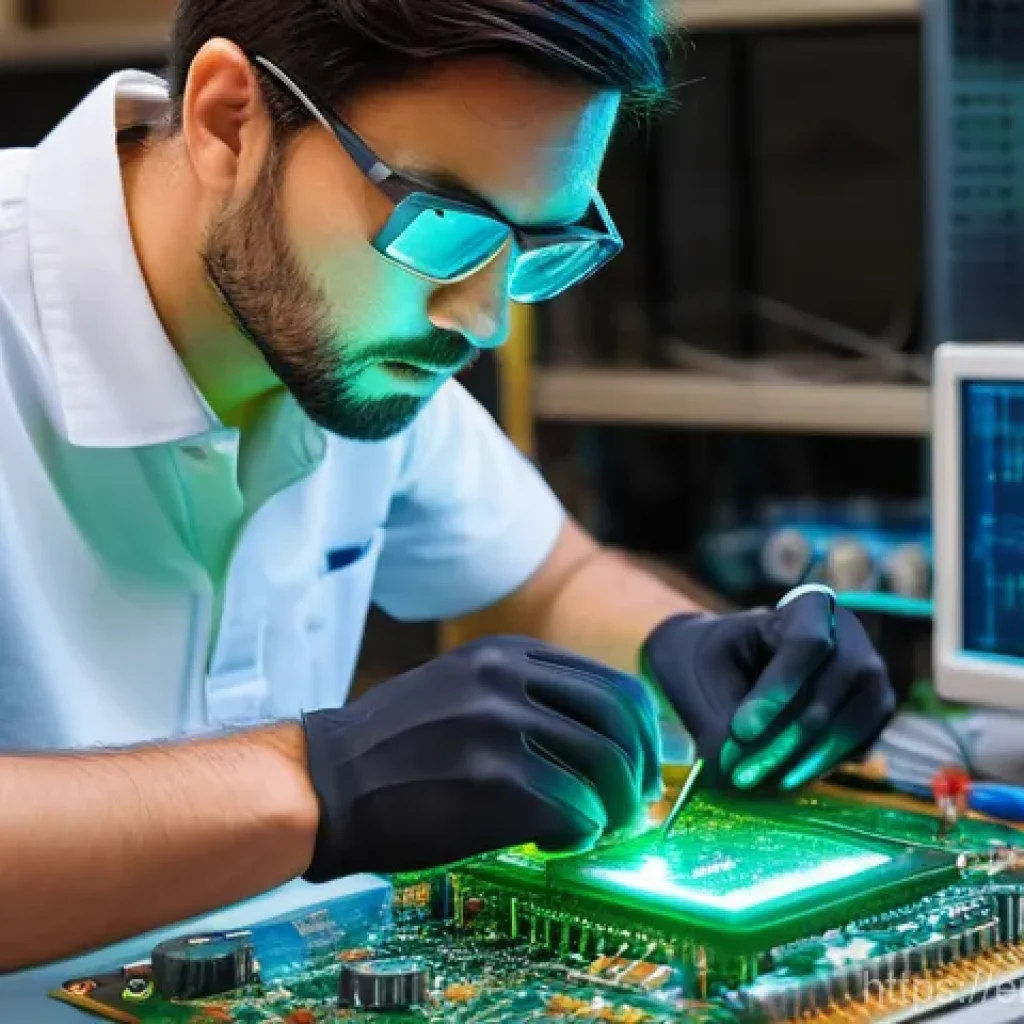
Hey there, fellow tech enthusiasts and curious minds! It feels like just yesterday I was knee-deep in schematics, grappling with circuits that seemed to have a mind of their own.
Over the years, I’ve seen the world of electrical engineering transform right before my eyes – from the foundational principles we all learn to the mind-bending innovations we’re witnessing today.
It’s truly a dynamic field, constantly pushing boundaries, and honestly, that’s what keeps me so incredibly energized and passionate about it. Navigating this ever-evolving landscape, where AI and the Internet of Things are reshaping everything from smart grids in our cities to the tiny embedded systems in our everyday gadgets, can be exhilarating but also a bit overwhelming.
I’ve personally experienced the thrill of seeing a complex project come to life and, let’s be real, the frustration of troubleshooting an elusive glitch at 2 AM.
From the massive shift towards renewable energy solutions and the booming electric vehicle market to the intricate dance of predictive maintenance powered by intelligent algorithms, the practical side of electrical engineering is richer and more challenging than ever.
And I’ve been there, adapting, learning, and often discovering the hard way. So, if you’re eager to cut through the jargon and get a real, unfiltered look at what it takes to thrive in this electrifying domain, buckle up!
We’re about to explore the real-world wisdom, insider tips, and future outlook that can genuinely accelerate your understanding and career. Let’s uncover some truly insightful practical experiences together.
Mastering the Modern Electrical Engineer’s Toolkit

Navigating the ever-evolving landscape of electrical engineering can feel like trying to catch lightning in a bottle – thrilling, challenging, and sometimes, a little shocking!
From my earliest days tinkering with circuits in my garage to working on cutting-edge renewable energy projects, I’ve learned that staying ahead isn’t just about knowing the theories; it’s about getting your hands dirty and embracing the practical side of things.
We’re talking about a field where yesterday’s groundbreaking tech is today’s foundation, and tomorrow’s innovations are just around the corner. What truly sets a successful engineer apart isn’t just their academic prowess, but their ability to adapt, troubleshoot on the fly, and understand the real-world implications of their designs.
I’ve personally seen how a solid grasp of foundational concepts, paired with an insatiable curiosity for new tools and methodologies, can turn a daunting problem into an exhilarating puzzle.
It’s about building that robust skillset that allows you to confidently tackle anything from power grid optimization to designing intricate IoT devices.
This isn’t just a job; it’s a constant learning adventure, and honestly, that’s what makes it so incredibly rewarding.
The Foundational Pillars You Can’t Skip
Honestly, sometimes we’re all tempted to jump straight to the flashy new tech, right? But believe me, after countless late nights debugging, I can tell you that a rock-solid understanding of the fundamentals is your absolute superpower.
Things like circuit theory, electromagnetism, and control systems aren’t just textbook chapters; they’re the language you speak when you’re trying to figure out why a sensor isn’t behaving or why a power supply is acting up.
I remember one project where we were integrating a complex motor control system, and a seemingly minor issue with signal integrity nearly derailed everything.
It was only by going back to basic principles of impedance matching and filtering that we cracked it. Without that deep dive into the ‘why’ behind the ‘what,’ we would have been completely lost.
It’s like building a skyscraper; you wouldn’t skimp on the foundation, would you? The same goes for your engineering knowledge. These pillars provide the framework for understanding *any* new technology that comes your way.
Embracing Simulation and Design Software
Gone are the days when you’d spend weeks building a prototype only to find a critical flaw. Today, simulation and design software are non-negotiable. Tools like SPICE for circuit simulation, MATLAB/Simulink for system modeling, and various CAD/EDA packages for PCB design have revolutionized how we work.
I recall an early project where we spent a small fortune on physical prototypes, only to discover a critical timing error. Had we properly utilized simulation from the get-go, we would have caught it in minutes, not months.
These tools aren’t just for efficiency; they enable you to explore countless design iterations, optimize performance, and even predict potential issues before a single component is ordered.
It’s not about replacing hands-on experience, but augmenting it, allowing us to innovate faster and with far greater confidence. Learning to master these platforms early on will give you an incredible edge in any engineering role, saving you headaches and resources down the line.
Navigating the Green Revolution: Powering a Sustainable Future
The energy landscape is shifting, and let me tell you, it’s one of the most exciting transformations I’ve witnessed in my career. Renewable energy isn’t just a buzzword; it’s a massive, tangible shift that electrical engineers are at the very heart of.
From designing robust solar panel arrays that can withstand extreme weather to developing smart grids that seamlessly integrate wind and hydro power, the challenges are immense, but so are the opportunities.
I’ve personally been involved in projects ranging from small-scale residential solar installations to large-grid connections for wind farms, and each one has presented unique complexities, from power conversion efficiency to grid stability issues.
It’s a field that demands a blend of traditional power engineering knowledge and an eagerness to embrace innovative solutions for energy storage and distribution.
The impact you can make here, both environmentally and economically, is truly profound. It’s not just about electricity; it’s about shaping the future of our planet.
The Rise of Smart Grids and Energy Storage
If you’ve been following the news, you know that smart grids are the future. We’re talking about an intelligent, self-healing network that can not only handle fluctuating renewable inputs but also optimize energy distribution, minimize waste, and even predict demand.
This isn’t just about putting sensors everywhere; it’s about sophisticated control systems, advanced data analytics, and robust communication networks, all orchestrated by electrical engineers.
Energy storage, particularly battery technologies, plays a pivotal role here. I’ve seen firsthand how integrating large-scale battery storage can stabilize a grid when solar output dips or wind suddenly dies down.
These systems are incredibly complex, involving power electronics, thermal management, and intricate control algorithms. Mastering these areas puts you right at the forefront of the energy revolution, contributing to a more resilient and sustainable infrastructure.
It’s a space where every day brings a new problem to solve, pushing the boundaries of what’s possible.
Electric Vehicles: More Than Just Batteries
The electric vehicle (EV) market is exploding, and while batteries get a lot of the spotlight, the electrical engineering behind an EV goes so much deeper.
From the sophisticated motor control systems that deliver smooth acceleration to the efficient power electronics that convert battery power to usable energy, it’s an electrical engineer’s playground.
I’ve had the chance to delve into the intricacies of EV charging infrastructure – designing high-power DC fast charging stations isn’t just about plugging in; it involves complex power flow management, grid interaction, and robust safety protocols.
And let’s not forget the embedded systems that manage everything from regenerative braking to infotainment. Working in EVs means you’re at the intersection of power, control, and embedded systems, constantly learning and adapting.
It’s a field that’s moving at warp speed, offering incredible opportunities to contribute to a cleaner, more efficient transportation future.
The Edge of Innovation: AI, IoT, and Embedded Systems
It feels like yesterday we were just dreaming about intelligent machines, and now, here we are, knee-deep in a world powered by AI, IoT, and tiny, powerful embedded systems.
This isn’t some far-off sci-fi fantasy; it’s the daily reality for many electrical engineers, and honestly, it’s exhilarating! From developing smart sensors that can collect environmental data to designing the microcontrollers that power our smart homes and autonomous vehicles, the lines between electrical engineering and computer science are blurring in the most exciting ways.
I’ve personally worked on projects where we integrated AI algorithms into embedded platforms for predictive maintenance, seeing how intelligent systems can literally anticipate failures before they happen.
It’s about more than just connectivity; it’s about creating systems that can perceive, reason, and act, making our world more efficient and responsive.
If you’re looking for a domain that constantly challenges you to learn new skills and think outside the box, this is absolutely it.
Designing for Connectivity: The IoT Ecosystem
The Internet of Things, or IoT, has truly transformed how we interact with our environment. It’s no longer just about connecting devices; it’s about creating an intelligent ecosystem where everything from your smart thermostat to industrial sensors can communicate and make data-driven decisions.
For us electrical engineers, this means designing ultra-low-power circuits, selecting the right communication protocols (think Wi-Fi, Bluetooth, LoRaWAN, 5G), and ensuring robust security at the hardware level.
I’ve spent countless hours optimizing power consumption in battery-powered IoT devices, realizing that every microamp matters when you’re aiming for years of operation.
The challenge is immense, but the impact is even greater. We’re essentially giving inanimate objects a voice, enabling them to provide invaluable data that can optimize everything from traffic flow to agricultural yields.
It’s a thrilling space where ingenuity in hardware design directly translates into real-world utility and massive data insights.
Embedded Intelligence: Bringing AI to the Edge
We often think of AI as residing in massive data centers, but the real magic often happens when we bring that intelligence closer to the source – right into embedded systems.
This “AI at the edge” is a game-changer. Imagine a smart camera that can process video analytics in real-time without sending everything to the cloud, or a factory sensor that can detect anomalies instantly.
For electrical engineers, this means designing high-performance, low-power microprocessors and FPGAs that can execute complex neural networks efficiently.
It involves understanding specialized hardware accelerators and optimizing data flow from sensors to processing units. I’ve personally experienced the satisfaction of seeing a small, embedded system make intelligent decisions autonomously, reducing latency and enhancing privacy.
It’s about democratizing AI, making powerful analytical capabilities available in even the smallest devices. This area demands a blend of hardware expertise and a solid grasp of software principles, making it a truly multidisciplinary and rewarding field.
Cracking the Code: Software Skills for the Hardware Professional
Alright, let’s be real. In today’s world, being an amazing hardware engineer isn’t enough if you’re not also comfortable with some code. The lines between hardware and software have blurred so much that they’re almost indistinguishable in many roles.
Whether you’re configuring microcontrollers, writing firmware for embedded systems, or developing scripts to automate your design processes, software skills are now an essential arrow in your quiver.
I remember early in my career, I was purely focused on circuits, but then I hit a wall on a project where I needed to customize a communication protocol.
That’s when I realized the power of being able to write my own C code for a microcontroller. It opened up a whole new world of possibilities and honestly, made me a much more versatile engineer.
It’s not about becoming a software developer, but about having enough proficiency to bridge the gap and truly bring your hardware designs to life.
Python: Your Automation and Data Analysis Powerhouse
If there’s one language I’d strongly recommend every electrical engineer picks up, it’s Python. Seriously, it’s a game-changer. I’ve used Python for everything from quickly parsing sensor data and generating reports to automating repetitive tasks in my design flow.
Need to convert a bunch of CAD files or analyze simulation results? Python can do it in minutes, saving you hours of manual work. It’s incredibly versatile, with a huge ecosystem of libraries for scientific computing (NumPy, SciPy), data analysis (Pandas), and even hardware control (PySerial, RPi.GPIO).
I remember struggling with manual data logging and analysis for a test bench, and once I learned Python, I whipped up a script that automated the whole thing – it was a massive relief!
It’s accessible, powerful, and becoming increasingly standard in many engineering workplaces. Trust me, investing time in Python will pay dividends in efficiency and capability.
Mastering Microcontroller Firmware (C/C++)
When you’re dealing with embedded systems, the language of choice is almost always C or C++. This is where you directly interact with the hardware, controlling registers, peripherals, and timing to make your device perform its intended function.
It’s a different beast than Python, requiring a deeper understanding of memory management and real-time constraints, but it’s incredibly rewarding. I’ve spent countless hours debugging C code on microcontrollers, understanding how every line impacts performance and power consumption.
There’s a certain satisfaction that comes from writing efficient, bare-metal code that brings a piece of custom hardware to life. Whether you’re working with Arduino, ESP32, or more industrial-grade microcontrollers, a strong grasp of C/C++ is absolutely essential for anyone looking to make their mark in embedded systems design.
It allows you to unlock the full potential of your hardware and tailor its behavior precisely to your application.
Career Compass: Charting Your Path in Electrical Engineering
The world of electrical engineering is vast, and sometimes, figuring out where you fit in can feel a bit like trying to find your way through a maze blindfolded.
But trust me, with so many exciting specializations, there’s a perfect niche for everyone. From designing the next generation of semiconductors to building advanced robotic systems, the opportunities are truly boundless.
I’ve seen colleagues transition from power systems to aerospace, and others move from consumer electronics to medical devices, all leveraging their core EE skills.
The key is to explore, experiment, and not be afraid to pivot when you discover a new passion. Your journey isn’t a straight line, and that’s perfectly okay.
What matters most is staying curious, continuously learning, and building a network of fellow engineers who can share insights and opportunities. It’s about aligning your skills and interests with the industry’s needs, and believe me, the industry needs a lot of talented EEs right now!
Finding Your Niche: Specializations in Demand
The beauty of electrical engineering is its incredible breadth. You could dive deep into power systems, designing the grids that light up cities, or perhaps focus on RF and microwave engineering, developing the wireless communication systems that connect us all.
Then there’s controls engineering, where you’re building the ‘brains’ of automated systems, or photonics, working with light-based technologies. Medical electronics is another burgeoning field, where EEs design everything from diagnostic equipment to life-sustaining devices.
I’ve had friends find incredible satisfaction in areas I barely touched in college, simply by following their interests. The important thing is to research these areas, maybe take an online course or two, and see what truly sparks your curiosity.
The demand for specialized skills is high, and finding your passion within EE can lead to a truly fulfilling career.
| Specialization | Key Skills | Emerging Trends |
|---|---|---|
| Power Systems | Grid analysis, Power electronics, Renewable energy integration, HVDC | Smart grids, Microgrids, Energy storage, Electric vehicle charging infrastructure |
| Embedded Systems | Microcontroller programming (C/C++), RTOS, Sensor integration, Low-power design | Edge AI, IoT security, Wireless connectivity (5G, LoRaWAN), Wearables |
| RF and Microwave | Antenna design, RFIC design, Signal integrity, Spectrum analysis | 5G/6G communication, Satellite systems, Radar, mmWave technologies |
| Control Systems | PID control, Robotics, System modeling (MATLAB/Simulink), Automation | Autonomous systems, Industrial IoT, Predictive control, Human-robot collaboration |
| Semiconductor Design | VLSI design, Analog/Digital circuit design, Fabrication processes, EDA tools | Neuromorphic computing, Quantum computing, Advanced packaging, GaN/SiC power devices |
Continuous Learning and Networking: Your Professional Lifelines
In a field that changes as rapidly as electrical engineering, resting on your laurels is simply not an option. Continuous learning isn’t just a good idea; it’s a necessity.
Whether it’s taking online courses, attending industry conferences, or simply devouring technical papers and blogs (like this one!), you need to keep your skills sharp and your knowledge current.
I make it a point to dedicate time each week to exploring new technologies, and honestly, it’s kept my work exciting and relevant. Equally important is networking.
Building relationships with other engineers, mentors, and industry professionals can open doors you never knew existed. I’ve landed jobs, found solutions to seemingly impossible problems, and even started collaborations simply by connecting with people who share my passion.
Go to local meetups, join online forums, and be proactive in expanding your professional circle. These connections are invaluable for career growth and staying informed about the latest industry movements.
Troubleshooting Like a Pro: The Art of Problem Solving

Let’s be honest, engineering isn’t always about pristine designs and perfect simulations. A huge part of the job, and often the most challenging yet rewarding, is troubleshooting.
Things *will* go wrong – circuits won’t behave as expected, code will have bugs, and components will fail. The ability to systematically identify, diagnose, and resolve issues is a superpower every electrical engineer needs to cultivate.
I’ve spent countless hours staring at schematics, probing circuits with an oscilloscope, and scratching my head over elusive glitches. Each one was a frustrating, yet ultimately invaluable, learning experience.
It’s not just about technical knowledge; it’s about developing a detective’s mindset, patiently gathering clues, and testing hypotheses until you pinpoint the root cause.
This skill is truly honed in the trenches, through hands-on experience, and it’s what separates good engineers from truly great ones.
Systematic Debugging: Your Step-by-Step Approach
When things aren’t working, it’s easy to get overwhelmed and start randomly tweaking things. Don’t do it! The most effective way to troubleshoot is to adopt a systematic approach.
Start by clearly defining the problem: what exactly isn’t working, and under what conditions? Then, isolate the issue – can you narrow it down to a specific component, module, or section of code?
Use your tools: oscilloscopes, multimeters, logic analyzers, and debuggers are your best friends. Check your assumptions, revisit your design, and compare expected behavior with actual behavior.
I remember a particularly stubborn problem where a motor wasn’t spinning correctly. After hours of checking the power supply and control signals, I finally realized a tiny, almost invisible cold solder joint was interrupting the communication line.
A methodical approach saved the day, preventing me from tearing everything apart unnecessarily. Document your steps, learn from each problem, and build up your mental database of common failure modes.
Learning from Failures: Embracing the “Aha!” Moments
No one likes failure, but in engineering, it’s often the best teacher. Every time a design doesn’t work, or a system crashes, it’s an opportunity for a profound learning experience.
Instead of getting discouraged, try to view it as an “aha!” moment waiting to happen. What did you learn from that blown fuse? Why did that amplifier oscillate?
These failures force you to dig deeper, to question your assumptions, and to truly understand the underlying physics and principles. I’ve had projects that nearly drove me crazy with repeated failures, but looking back, those were the times when I grew the most as an engineer.
They built my resilience, sharpened my problem-solving skills, and solidified my understanding in ways that smooth successes never could. So, don’t shy away from mistakes; embrace them as invaluable lessons on your path to mastery.
Embracing Entrepreneurship: From Circuit to Startup
Ever wondered if your brilliant circuit design or innovative embedded system could be more than just a project? What if it could be a product? The entrepreneurial spirit is alive and well within electrical engineering, and it’s genuinely exciting to see how many engineers are taking their ideas from the lab bench to the marketplace.
Moving from pure engineering to considering market demand, business models, and customer acquisition can feel like a massive leap, but it’s a journey many EEs are successfully navigating.
I’ve seen friends launch their own companies based on niche hardware solutions, leveraging their technical expertise to fill gaps in the market. It’s about seeing a problem, designing an elegant solution, and then having the courage to take that solution to a wider audience.
It’s challenging, no doubt, involving a lot of late nights and tough decisions, but the satisfaction of building something from the ground up that genuinely impacts people is unparalleled.
Identifying Market Gaps and Niche Opportunities
The first step in any entrepreneurial venture is identifying a real need that isn’t being adequately met. As electrical engineers, we often encounter inefficiencies or limitations in existing technologies.
These are your goldmines! Maybe you’ve developed a more robust sensor for industrial applications, or a more energy-efficient power supply for consumer electronics.
Look for pain points in your own work or in industries you understand well. A colleague of mine started a company designing specialized testing equipment after repeatedly encountering shortcomings in commercially available options.
He saw a gap, and his deep engineering knowledge allowed him to fill it with a superior product. Don’t just invent; innovate with a clear customer in mind.
Research your target market, understand their challenges, and then design a solution that genuinely offers value. This requires a shift from pure technical perfection to market relevance, which is a crucial distinction.
Prototyping, Funding, and Scaling Your Vision
Once you have an idea, the journey from concept to commercial product involves several critical stages. Rapid prototyping is essential – getting a minimum viable product (MVP) into potential customers’ hands quickly for feedback.
This often means iterating rapidly on your hardware and firmware. Then comes the daunting but exciting task of funding. Whether it’s bootstrapping, angel investors, or venture capital, understanding how to articulate your vision and business plan to non-engineers is paramount.
And finally, scaling. Moving from producing a few units to thousands or even millions involves manufacturing partnerships, supply chain management, and quality control, all of which require a different set of skills than pure design.
I’ve witnessed firsthand the challenges and triumphs of friends navigating these stages, and it’s a testament to their resilience and multifaceted skill sets.
It’s a challenging but incredibly rewarding path for the engineer with an entrepreneurial spark.
Bringing It All Together
Whew, what a journey we’ve been on, exploring the incredible breadth and depth of modern electrical engineering! It’s truly a dynamic field that constantly pushes us to learn, adapt, and innovate. From the foundational circuits that power everything around us to the cutting-edge realms of AI, sustainable energy, and entrepreneurship, the opportunities are endless. Remember, this isn’t just about formulas and schematics; it’s about building a better, smarter, and more connected world. Keep that passion alive, stay curious, and never stop building!
Useful Insights for Your Engineering Journey
1. Never Underestimate the Fundamentals: Seriously, no matter how advanced you get, a solid grasp of circuit theory, electromagnetism, and control systems will always be your bedrock. I’ve seen complex problems unravel simply by going back to basics. It’s like having a reliable compass in a dense forest – essential for finding your way.
2. Embrace Software Proficiency: The lines between hardware and software are vanishing. Learning Python for automation and data analysis, and C/C++ for embedded systems, isn’t just a bonus anymore; it’s a critical skill that will amplify your hardware expertise and open up so many new avenues.
3. Stay Curiously Connected: The pace of innovation in EE is relentless. Make it a habit to constantly learn, whether through online courses, industry journals, or attending virtual conferences. Equally important is networking – build those connections; they’re invaluable for mentorship, collaboration, and career opportunities.
4. Develop a Troubleshooting Mindset: Things will go wrong, that’s just a fact of engineering. But learning how to systematically diagnose problems, test hypotheses, and patiently work through issues is perhaps one of the most powerful skills you can cultivate. Each “failure” is a hidden lesson waiting to be discovered.
5. Consider the ‘Why’ Beyond the ‘How’: As engineers, we’re fantastic at building ‘how’ things work. But taking a moment to understand the ‘why’ – the market need, the environmental impact, the user experience – can elevate your designs from merely functional to truly impactful and innovative. This holistic view is what often leads to groundbreaking solutions.
Key Takeaways for the Modern EE
As we wrap up, here are the absolute essentials I hope you carry forward. These aren’t just theoretical points; they’re lessons learned from years in the trenches, developing, debugging, and deploying:
Foundational Strength is Non-Negotiable
-
Your understanding of core EE principles is the bedrock upon which all advanced knowledge rests. Don’t skip the basics; they are your most potent problem-solving tools.
-
Regularly revisit concepts like circuit analysis, electromagnetism, and control systems. They provide the fundamental framework for every new technology you encounter.
Embrace the Interdisciplinary Nature
-
The modern electrical engineer is a hybrid: part hardware wizard, part software enthusiast. Proficiency in coding (Python, C/C++) is no longer optional; it’s transformative for automation and embedded development.
-
Understanding adjacent fields like data science, materials science, and mechanical engineering will make you a more versatile and innovative professional.
Innovation and Impact Drive Progress
-
Focus on areas like renewable energy, smart grids, and AI at the edge. These sectors are not only technologically exciting but also offer immense potential for positive global impact.
-
Cultivate an entrepreneurial mindset. Look for market gaps, design innovative solutions, and don’t be afraid to explore bringing your ideas from concept to commercial reality.
Lifelong Learning and Connection are Crucial
-
The field evolves constantly. Make continuous learning a core habit, whether through formal education, self-study, or industry engagement.
-
Actively build your professional network. Connections with peers and mentors provide invaluable insights, support, and opportunities throughout your career.
Frequently Asked Questions (FAQ) 📖
Q: How can I stay ahead of the curve in Electrical Engineering with
A: I and IoT evolving so rapidly?
A1: It’s an incredible time to be in electrical engineering, isn’t it? The pace of change, especially with AI and IoT becoming so central to everything, can feel like trying to catch lightning in a bottle.
What I’ve personally found incredibly effective is a multi-pronged approach. First, dive deep into foundational concepts like signal processing, embedded systems, and control theory.
These are the bedrock upon which all the fancy new tech is built, and honestly, a solid grasp here makes understanding the complex AI algorithms or intricate IoT protocols so much easier.
I remember spending countless nights debugging a simple microcontroller project, and those struggles cemented my understanding in a way no textbook ever could.
Beyond the basics, practical engagement is key. Look for online courses – platforms like Coursera, edX, or even specialized engineering academies offer fantastic programs on machine learning for embedded systems or IoT architecture.
But don’t just watch; build! Get your hands on development boards like Raspberry Pi or ESP32, experiment with sensor networks, or try to implement a basic AI model on an edge device.
I’ve found that the best way to truly internalize these new concepts is by getting my hands dirty. Join local meetups or online communities too; sharing experiences and troubleshooting with peers has been invaluable for me, not just for learning but also for spotting emerging trends and understanding where the industry is heading.
Remember, it’s not about knowing everything, but about cultivating a continuous learning mindset and enjoying the journey of discovery!
Q: What are some of the most exciting and promising career paths for electrical engineers today, especially with the boom in EVs and renewable energy?
A: Oh, this is a question I get asked a lot, and for good reason! The landscape has shifted dramatically, creating some truly electrifying (pun intended!) opportunities.
From my vantage point, the electric vehicle (EV) sector and renewable energy are absolute powerhouses right now. In EVs, we’re talking about everything from battery management systems – designing them, optimizing their performance, extending their life – to power electronics for charging infrastructure and motor control.
I’ve seen friends transition from traditional automotive roles to designing incredibly efficient charging stations, and the innovation happening there is just breathtaking.
Then there’s renewable energy, which isn’t just about solar panels and wind turbines anymore. It’s about smart grids, energy storage solutions, and the intricate dance of integrating diverse power sources into a resilient national grid.
Think about roles in grid modernization, developing advanced inverter technologies, or even working on microgrids for remote communities. Predictive maintenance, fueled by AI, is another massive area across both these fields, where engineers are using data to anticipate failures and optimize system performance.
What really excites me is how these paths often intertwine – imagine designing a smart charging system for EVs that’s powered entirely by a localized solar farm, managed by an AI!
The possibilities are truly endless, and if you have a passion for sustainable technology, these fields are ripe for innovation and offer incredibly rewarding careers.
Q: What practical skills or certifications should an electrical engineer focus on to thrive in cutting-edge fields like smart grids or embedded
A: I?
A3: This is where the rubber meets the road, isn’t it? Knowing what skills truly move the needle in these advanced fields can make all the difference.
From my own experience, beyond the core electrical engineering fundamentals, there are a few practical areas that I’d absolutely emphasize.
For smart grids and power systems, definitely beef up your knowledge in power electronics design and control.
Understanding how inverters, converters, and transformers behave under various conditions, especially with intermittent renewable sources, is critical.
Familiarity with grid codes, energy management systems (EMS), and SCADA (Supervisory Control and Data Acquisition) systems will also set you apart. I’ve found that certifications in specific industry standards or platforms, perhaps related to cybersecurity in critical infrastructure, can also be highly valued.
When it comes to embedded AI, it’s a slightly different beast. Here, proficiency in programming languages like Python and C/C++ is non-negotiable, especially for optimizing code for resource-constrained devices.
Dig into embedded Linux or RTOS (Real-Time Operating Systems) development. Understanding machine learning frameworks like TensorFlow Lite or PyTorch Mobile, and how to deploy and optimize models on edge devices, is a huge advantage.
My personal tip? Get comfortable with hardware-software co-design. Often, the best AI solutions on embedded systems come from a deep understanding of both the silicon and the algorithms running on it.
Think about projects that combine sensor data acquisition with on-device intelligence. These practical skills, backed by relevant certifications, will undoubtedly give you a significant edge in these incredibly dynamic and future-forward domains.