Hey everyone! It’s your favorite tech enthusiast back with another deep dive into the electrifying world around us. You know, sometimes I look at the gadgets and systems we use every single day – from the smartphone in your hand to the smart home devices making life easier, or even the complex machinery powering our industries – and I’m just blown away by the sheer ingenuity behind it all.
It’s not just about wires and circuits; it’s about the incredibly talented electronic engineers who dream up these solutions and the brilliant minds who design and operate the sophisticated equipment that brings those dreams to life.
I’ve spent countless hours tinkering, building, and even troubleshooting, and I’ve seen firsthand how rapidly this field is evolving. We’re talking about everything from the tiny, powerful chips enabling AI on the edge, to the robust systems keeping our smart cities humming.
The pace is exhilarating, and frankly, a little daunting if you don’t stay on top of it. I’ve been noticing some truly groundbreaking shifts lately, especially with the integration of advanced AI into design processes and the constant push for more energy-efficient and sustainable solutions.
It’s not just about making things faster or smaller anymore; it’s about making them smarter, more reliable, and environmentally conscious. I’m excited to share what I’ve been discovering about these cutting-edge developments and how they’re shaping our future.
Ready to uncover the fascinating world of electronic engineering and equipment? Let’s dive deeper below!
The Unseen Architects: Powering Our Digital Lives

When I look around, whether it’s the smart thermostat adjusting my home’s temperature or the incredibly powerful smartphone in my pocket, I’m always amazed by the sheer ingenuity.
It’s easy to take these everyday conveniences for granted, but behind every seamless interaction is a symphony of electronic engineering. These aren’t just gadgets; they’re intricate systems designed by brilliant minds who envision how electricity can be harnessed to perform incredible feats.
I’ve spent countless hours dissecting old electronics, trying to understand the “why” behind every circuit board and component. My biggest takeaway? The true magic lies in the foundational work of electronic engineers who craft the very infrastructure our digital world depends on.
They’re the unsung heroes, constantly pushing the boundaries of what’s possible, from developing ultra-low power circuits that extend battery life for days to designing high-speed communication systems that connect us globally in an instant.
It’s a field that demands both intense logical thinking and a creative spark, turning abstract concepts into tangible, life-changing devices.
The Core of Everyday Gadgets
Think about your daily routine. From the moment your smart alarm gently wakes you, to brewing your coffee with a smart appliance, to working on your laptop, and finally unwinding with your favorite streaming service – electronics are at the very heart of it all.
What makes these devices so intelligent and responsive? It’s the meticulously designed microcontrollers, memory chips, sensors, and power management units, all working in perfect harmony.
I remember once trying to repair an old vintage radio; the simplicity of its components compared to today’s miniaturized wonders really hit home how far we’ve come.
Modern gadgets pack immense computing power into incredibly small footprints, largely thanks to advancements in integrated circuit design. These tiny powerhouses enable everything from facial recognition on your phone to the complex algorithms running self-driving cars.
Without these fundamental electronic building blocks, our modern, connected lifestyle simply wouldn’t exist, and that’s a thought that truly puts the importance of this field into perspective.
Why Electronic Engineers Are the Real MVPs
In my opinion, electronic engineers are truly the Most Valuable Players of the tech world. They’re not just assembling existing parts; they’re inventing new ways for electrons to behave, creating innovative solutions to complex problems.
Take, for instance, the push for more sustainable technology. Engineers are at the forefront, designing energy-efficient components, developing alternative power sources, and even figuring out how to recycle electronic waste more effectively.
I’ve had the privilege of collaborating with a few during my early tinkering days, and their dedication to problem-solving is infectious. They grapple with challenges like signal integrity, thermal management, and electromagnetic compatibility, all while striving for optimal performance and cost-effectiveness.
It’s a relentless pursuit of perfection, and their work directly translates into the faster, smaller, and smarter devices we’ve all come to rely on. Their expertise is what transforms a theoretical concept into a functional, reliable product that improves our lives every single day.
From Tiny Chips to Smart Cities: The Scale of Modern Electronics
It’s wild to think that the same fundamental principles of electronic engineering apply whether you’re working on a tiny wearable device or orchestrating the vast networks that manage a smart city.
The scale is absolutely mind-boggling, and it’s something I’ve seen evolve dramatically over my years of fascination with technology. We’re talking about components that are literally microscopic, packed with billions of transistors, yet capable of communicating with massive, city-wide sensor arrays and data centers.
The transition from individual, isolated devices to an interconnected ecosystem has been truly transformative. It’s not just about making things smaller or faster anymore; it’s about making them smarter, more efficient, and incredibly robust.
I personally find the challenge of scaling solutions – making a concept work for one device, then adapting it for millions across a vast infrastructure – to be one of the most exciting aspects of modern electronics.
Miniaturization and the Power of AI at the Edge
One of the most profound shifts I’ve observed is the incredible miniaturization of electronic components coupled with the rise of “AI at the edge.” Remember when a computer chip was the size of your thumb?
Now, we have powerful processors that are almost invisible, tucked away inside everything from smartwatches to tiny medical implants. This isn’t just a matter of making things small for the sake of it; it enables new functionalities.
Imagine sensors in a factory that can analyze data and make decisions locally, without sending everything to the cloud. That’s AI at the edge, and it’s a game-changer for speed, privacy, and reliability.
I’ve been experimenting with some single-board computers that integrate AI accelerators, and the potential for real-time, intelligent responses in devices is staggering.
It means less latency, enhanced security, and often, more efficient use of power. It really feels like we’re on the cusp of an era where every device, no matter how small, can possess a degree of intelligence.
Robust Systems for a Connected World
Building robust electronic systems for a connected world isn’t just about putting components together; it’s about ensuring they can withstand everything from environmental extremes to cyber threats.
Think about the infrastructure for a smart city – traffic sensors, smart lighting, environmental monitors, all communicating constantly. These systems need to be incredibly reliable, able to operate 24/7 without fail, and secure against malicious attacks.
My own experience with setting up home automation systems has taught me a lot about the frustrations of intermittent connectivity or unreliable sensors, but imagine that on a city-wide scale!
Engineers are constantly developing new materials, error-correction codes, and encryption methods to build these resilient networks. They also focus heavily on redundant systems and fail-safe mechanisms, ensuring that a single point of failure doesn’t bring down an entire network.
It’s a meticulous process, but absolutely essential for the safety and functionality of our increasingly interconnected lives.
Navigating the Innovation Highway: Cutting-Edge Trends
The electronics industry never stands still, and honestly, that’s what makes it so thrilling. Just when you think you’ve got a handle on the latest tech, something new pops up that completely redefines the landscape.
Staying current feels like navigating a super-fast innovation highway, and I’m constantly looking for the next exit to explore. What’s truly exciting is how seemingly disparate fields are now converging, creating entirely new categories of innovation.
We’re seeing biological sciences influencing chip design, advanced materials revolutionizing battery technology, and machine learning reshaping how we interact with devices.
It’s not just about incremental improvements anymore; it’s about fundamental shifts that promise to unlock capabilities we could only dream of a decade ago.
I find immense satisfaction in identifying these emerging trends and understanding their potential impact on our daily lives, and for me, it’s what keeps the passion for technology burning brightly.
AI in Design: A Game Changer
Artificial intelligence isn’t just making our devices smarter; it’s also revolutionizing how those devices are designed in the first place. I’ve been following the developments in AI-driven design tools with keen interest, and frankly, they’re nothing short of a game-changer.
Imagine an AI that can rapidly explore thousands, even millions, of design permutations for a new circuit board, optimizing for performance, power consumption, and manufacturing costs in a fraction of the time a human engineer could.
This isn’t about replacing engineers, but augmenting their capabilities, allowing them to focus on the more creative and complex challenges. My personal experience with trying to optimize circuit layouts manually has shown me just how tedious and time-consuming that process can be.
AI tools can identify efficiencies and novel approaches that might be overlooked by traditional methods, accelerating innovation and bringing new products to market much faster.
It’s a powerful collaboration between human ingenuity and artificial intelligence that’s redefining the entire design workflow.
Sustainable Electronics: More Than Just a Buzzword
For a long time, the environmental impact of electronics was a bit of an afterthought, but thankfully, that’s changing rapidly. “Sustainable electronics” is far more than just a buzzword now; it’s a critical design imperative.
Consumers are increasingly demanding eco-friendly products, and regulatory bodies are pushing for stricter standards. This means engineers are deeply involved in everything from sourcing ethical and recyclable materials to designing products for longevity and easy repair.
I’ve always tried to be conscious of my own tech consumption, and seeing companies actively working towards reducing their carbon footprint and minimizing e-waste is genuinely encouraging.
It’s a complex challenge involving the entire product lifecycle, from minimizing hazardous materials in manufacturing to implementing efficient end-of-life recycling programs.
The industry is actively researching biodegradable components and energy-harvesting technologies to reduce reliance on traditional power sources, moving us towards a much greener technological future.
| Key Trends Shaping Modern Electronics | Description | Impact on Consumers |
|---|---|---|
| Artificial Intelligence (AI) Integration | Embedding AI directly into devices for faster, localized data processing and intelligent decision-making. | Smarter, more responsive devices; enhanced privacy due to less cloud dependency. |
| Sustainable Design & Materials | Focus on eco-friendly manufacturing, recyclable components, and energy-efficient operations. | More environmentally friendly products; potential for longer device lifespans and reduced waste. |
| Advanced Connectivity (5G/6G & IoT) | Next-generation wireless standards and widespread Internet of Things deployments for seamless communication. | Faster internet speeds; more interconnected smart home and city experiences; new service opportunities. |
| Quantum Computing Development | Research and development into quantum computers for solving complex problems far beyond classical computers. | Revolutionary breakthroughs in medicine, materials science, and cryptography (long-term impact). |
| Edge Computing Proliferation | Processing data closer to the source (the “edge” of the network) rather than in centralized data centers. | Reduced latency; improved real-time applications; enhanced data security. |
Beyond the Blueprint: Bringing Designs to Life
Designing an electronic device is one thing, but actually bringing that design into the physical world? That’s an entirely different beast, and it’s where the true magic of engineering transforms into tangible products.
It’s a fascinating journey that takes a concept from a digital blueprint to a fully functional gadget you can hold in your hand. I’ve always been captivated by the manufacturing process, from watching circuit boards being populated with minuscule components to seeing the final product assembled and tested.
It’s a testament to incredible precision and coordination. This phase often involves a huge amount of trial and error, optimization, and rigorous testing, ensuring that what was envisioned on paper truly performs as expected in the real world.
This is where the rubber meets the road, and it’s a critical stage that determines the quality and reliability of every electronic device we use.
Prototyping: Where Ideas Take Shape
Prototyping is arguably one of the most exciting stages for anyone who loves to build. This is where engineers transform their abstract designs into physical models for the first time.
It’s all about iterative development: build a small part, test it, refine it, then build a more complete version. I remember my first attempt at building a simple sensor array; the initial prototype was clunky and barely worked, but with each iteration, it got closer to my vision.
Modern prototyping techniques, including rapid PCB (Printed Circuit Board) fabrication and 3D printing for enclosures, have dramatically sped up this process.
It allows designers to quickly identify flaws, test new features, and gather critical data on performance and reliability before committing to mass production.
This hands-on phase is where the real learning happens, translating theoretical knowledge into practical solutions and often uncovering unforeseen challenges that require creative problem-solving.
It’s a dynamic and crucial step in the journey from idea to product.
Manufacturing Marvels: Precision on a Massive Scale
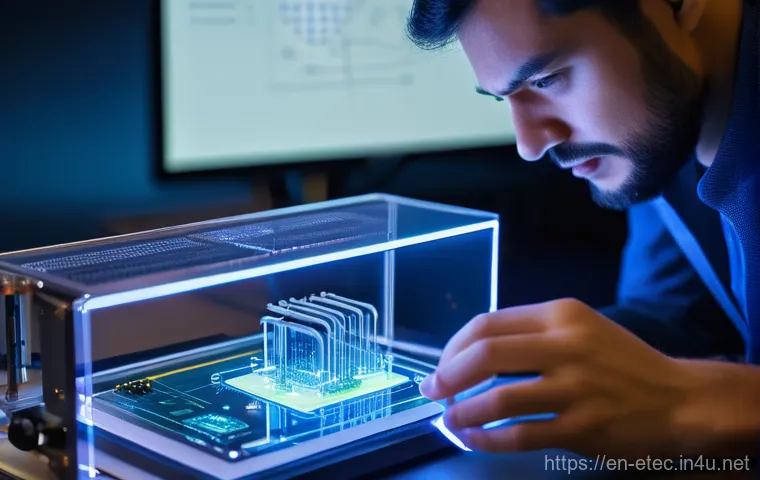
Once a design is finalized and prototyped, it moves into the manufacturing stage, and honestly, the scale and precision involved are nothing short of a marvel.
Modern electronics manufacturing facilities are incredible spectacles of automation and engineering prowess. Robotic arms precisely place components tinier than a grain of sand onto circuit boards, lasers cut and etch materials with micron-level accuracy, and sophisticated machines perform countless quality checks.
I’ve always been fascinated by the sheer volume of products that can be produced with such consistent quality, day in and day out. This isn’t just assembly; it’s a highly optimized process that involves intricate supply chains, rigorous process controls, and advanced automation to ensure every single unit meets stringent specifications.
It’s a testament to human innovation, utilizing advanced machinery to create complex devices with efficiency and reliability that would have seemed impossible just a few decades ago.
The Green Revolution in Electronics: Sustainability Matters
I’ve noticed a significant shift in recent years, one that I’m incredibly passionate about: the growing emphasis on sustainability within the electronics industry.
It’s no longer enough for a device to be powerful or sleek; it also needs to be responsible. This “Green Revolution” is about minimizing the environmental footprint of our tech, from conception to disposal.
It’s a complex challenge, but one that absolutely needs to be tackled head-on, and I’m thrilled to see so many engineers and companies dedicating themselves to it.
For me, it boils down to our collective responsibility to ensure that the amazing technologies we create don’t come at the cost of our planet. It’s about building a future where innovation and environmental stewardship go hand-in-hand, and that’s a vision I can wholeheartedly get behind.
Eco-Friendly Materials and Processes
The quest for eco-friendly materials is really gaining traction. Traditionally, electronics have relied on a lot of finite resources and sometimes even hazardous substances.
Now, engineers are actively seeking alternatives – think biodegradable plastics for casings, recycled metals for internal components, and lead-free solder.
The manufacturing processes themselves are also undergoing a transformation, aiming to reduce energy consumption, minimize water usage, and decrease the generation of toxic byproducts.
I recently read about new methods for extracting rare earth elements that significantly reduce environmental damage, which is incredibly promising. These advancements aren’t always easy; they often require completely rethinking established production methods.
However, the commitment to developing and implementing these greener alternatives is a clear indicator that the industry is taking its environmental responsibilities seriously, paving the way for a more sustainable future for all our gadgets.
Recycling and E-Waste: Our Collective Responsibility
Let’s be honest, e-waste is a massive problem. All those old phones, laptops, and chargers piling up create a huge environmental burden. This is where our collective responsibility truly comes into play.
The Green Revolution in electronics isn’t just about what happens during manufacturing; it’s critically about what happens at the end of a product’s life.
Engineers are now designing products with “design for disassembly” in mind, making it easier to take devices apart and recover valuable materials. I always make sure to properly recycle my old electronics, and I encourage everyone else to do the same.
Many manufacturers offer take-back programs, and specialized recycling facilities can safely extract precious metals and other components, preventing them from ending up in landfills.
It’s a continuous cycle that requires both innovative engineering for better recyclability and a conscious effort from us, the consumers, to make sure our old tech doesn’t become a toxic legacy.
Future Gazing: What’s Next in Electronic Frontiers
It’s almost impossible not to get excited when you start thinking about the future of electronics. The pace of innovation is accelerating, and what seems like science fiction today often becomes commonplace tomorrow.
I find myself constantly looking over the horizon, trying to imagine what the next big leap will be. We’re on the cusp of truly transformative technologies, and the underlying electronic engineering principles are what will make them a reality.
From revolutionary computing paradigms to entirely new ways of interacting with our environment, the potential is boundless. My personal fascination stems from seeing how these complex, abstract ideas are slowly but surely being engineered into functional systems that will reshape our world.
It’s a thrilling thought to consider what our smart homes, cities, and even our bodies might look like thanks to the continuous breakthroughs in this incredible field.
Quantum Computing: The Ultimate Leap?
If there’s one area that genuinely feels like it belongs in a sci-fi novel, it’s quantum computing. This isn’t just about faster computers; it’s about an entirely different way of processing information, leveraging the bizarre principles of quantum mechanics.
While still in its early stages, the implications are absolutely mind-blowing. Imagine being able to solve problems that are currently impossible for even the most powerful supercomputers, from discovering new drugs and materials to breaking modern encryption methods.
I’ve been reading up on the incredible engineering challenges involved in building quantum computers – keeping qubits stable at near absolute zero, dealing with entanglement – it’s a heroic effort.
While we might not have quantum computers in our homes anytime soon, the foundational electronic engineering work being done now is laying the groundwork for what could be the next ultimate leap in computational power, fundamentally changing our understanding of what’s possible.
Advanced Robotics and Automation
Robotics and automation have been advancing steadily for decades, but the integration of sophisticated electronics, AI, and advanced sensing technologies is propelling them into a new era.
We’re talking about robots that are not just repetitive machines, but intelligent systems capable of learning, adapting, and interacting more naturally with their environment.
I’ve seen some truly impressive demonstrations of robotic dexterity and navigation, which are made possible by incredibly complex electronic control systems and sensor fusion.
Think about surgical robots that assist with precision operations, autonomous vehicles that navigate complex urban landscapes, or even sophisticated drones performing intricate inspections.
These aren’t just industrial tools anymore; they’re becoming increasingly present in our daily lives, and the continued innovation in electronic engineering is what makes them smarter, safer, and more capable of performing tasks that were once exclusively human domains.
The potential for these advanced systems to improve efficiency, safety, and even quality of life is immense, and it’s a future I’m genuinely excited to witness unfold.
Wrapping Things Up
Whew! What a journey we’ve been on, diving deep into the incredible world of electronic engineering. It’s truly mind-boggling to think about how these unseen architects shape every single aspect of our digital lives, from the tiny chips in our wearables to the vast networks powering smart cities. My hope is that by now, you’ve gained a deeper appreciation for the sheer ingenuity and dedication that goes into making our tech-driven world function so seamlessly. It’s a field that never stops evolving, constantly pushing boundaries and creating solutions to challenges we didn’t even know existed. Keep an eye out, because the next big breakthrough is always just around the corner!
Useful Info to Keep in Mind
1. Explore STEM Fields: If you or someone you know has a knack for problem-solving and a curiosity about how things work, exploring careers in electronic engineering or related STEM fields can be incredibly rewarding. The demand for these skills is only growing.
2. Responsible E-Waste Disposal: Always remember to properly recycle your old electronics. Check with local authorities or manufacturers for designated collection points or take-back programs to ensure components are handled responsibly.
3. Stay Curious About Innovations: The tech landscape changes rapidly. Following reputable tech news outlets and blogs (like this one!) is a great way to stay informed about the latest advancements in chips, AI, and sustainable tech.
4. Consider Repair Over Replace: Before tossing a broken gadget, look into repair options. Many common issues can be fixed, extending the life of your devices and reducing e-waste. It’s often easier than you think!
5. Look for Sustainable Products: When purchasing new electronics, keep an eye out for brands that prioritize sustainability, using eco-friendly materials, offering repairability, and providing clear recycling information. Your choices make a difference.
Key Takeaways
The world of electronics is powered by the relentless innovation of electronic engineers, who are not only building the gadgets we use daily but also designing the infrastructure for our smart future. Their work, ranging from miniaturization and AI integration to robust system development, is foundational to our connected lives. Furthermore, the industry is making significant strides towards sustainability, focusing on eco-friendly materials and responsible e-waste management. Keeping abreast of these trends helps us appreciate the complexity and impact of technology, encouraging us all to be more mindful consumers and innovators.
Frequently Asked Questions (FAQ) 📖
Q: What are the most exciting recent advancements in electronic engineering, and how are they impacting our daily lives?
A: Oh man, where do I even begin? It feels like we’re living in a sci-fi movie sometimes with how fast things are progressing! From what I’ve been seeing and playing around with, the integration of Artificial Intelligence (AI) directly into hardware, especially at the “edge” – think your smartphone, wearables, or even smart sensors – is a game-changer.
This isn’t just cloud AI; it’s AI on your device, making real-time decisions without needing to constantly talk to a distant server. It means our gadgets are getting smarter, faster, and more private, able to do things like advanced image processing or predictive maintenance right then and there.
I’ve definitely noticed my phone’s camera getting eerily good at figuring out what I’m trying to photograph, thanks to this kind of on-device AI! We’re also seeing a huge push in semiconductor and EDA (Electronic Design Automation) advancements, with chiplet architecture becoming a big deal.
This allows for more modular and powerful designs, which is crucial for everything from super-fast data centers to the tiny chips in your smart fridge.
Plus, 5G isn’t just about faster downloads; it’s enabling truly hyper-connected applications for smart cities and advanced healthcare systems, which is something I’m really excited about for the future of urban living.
Q: With all this rapid change, how can aspiring engineers or even enthusiasts like us keep up with the cutting-edge developments in the field?
A: That’s a fantastic question, and honestly, it’s a challenge even for those of us living and breathing this stuff! What I’ve personally found invaluable is a multi-pronged approach.
First, you absolutely have to dive into industry publications and online resources. There are tons of online magazines, technical journals, and specialized websites that cover the latest breakthroughs.
I make it a point to regularly check out what the big companies are doing on their LinkedIn pages or official sites – they often share news on their latest tech.
Don’t underestimate the power of professional organizations like the IEEE; their magazines, webinars, and conferences are goldmines of information. I’ve also found attending trade shows and seminars incredibly useful, not just for seeing new tech firsthand, but for networking with other passionate people.
And for those really wanting to dig deep, building systems described in papers or even just tinkering and trying to improve existing designs is the best way to make what you read actually ‘click.’ The hands-on experience is truly unmatched.
It’s all about continuous learning; if you’re not evolving, you’re falling behind!
Q: You mentioned the push for sustainability. What does “environmentally conscious” really mean in electronic engineering, and what are some practical examples?
A: Ah, sustainability in electronics – this is something I’m really passionate about, and it’s becoming a non-negotiable aspect of modern engineering. “Environmentally conscious” means designing and producing electronics in a way that minimizes their negative impact on our planet throughout their entire lifecycle.
We’re talking about reducing waste, conserving energy, and minimizing pollution. For instance, a huge part of the problem is e-waste; the world generated over 62 million metric tons of electronic waste in 2024, and shockingly, only about 22 percent was properly recycled.
So, environmentally conscious design focuses on creating products that are easier to repair, upgrade, and ultimately recycle. This means selecting materials that are less harmful, designing circuits to be more energy-efficient, and even thinking about how firmware can extend a product’s lifespan.
We’re seeing engineers working on innovative materials, like biodegradable alternatives to traditional plastics, which could drastically reduce landfill waste.
There’s also a big push for energy-efficient computing and smarter grids that integrate renewable energy sources. For example, companies are focusing on shrinking carbon footprints and using recyclable materials as a “bragging right” – and honestly, as a consumer, I’m already asking how sustainable a product is right alongside its battery life!
It’s all about creating technology that serves us without compromising the planet, and that, my friends, is a future worth investing in.