
It feels like just yesterday I was knee-deep in wires, soldering fumes, and troubleshooting circuits, all while staring down a looming practical exam.
Sound familiar? We’ve all been there, that moment where your theoretical knowledge meets the real-world challenge, and trust me, it can be a bit intimidating!
Especially with how fast electronic technology is evolving today, from intricate IoT systems to the fascinating world of AI-powered hardware, preparing for those hands-on assessments requires more than just textbook smarts.
The stakes feel higher than ever, right? When I was preparing for my own certifications, I quickly learned that traditional study methods simply weren’t enough.
You need to immerse yourself, anticipate the unexpected, and truly *feel* the components. That’s why diving deep into effective simulation strategies isn’t just a good idea, it’s absolutely essential to nail those practicals and truly understand the cutting-edge tech that’s shaping our future.
I’ve personally used some incredibly effective methods that saved me a ton of stress and boosted my confidence, and I’m genuinely excited to share what I’ve discovered.
Let’s accurately find out all the tips and tricks to ace your electronic technology practical exam simulations.
Getting Your Hands Dirty (Virtually): The Power of Simulation
It feels like just yesterday I was frantically trying to debug a circuit, solder smoking, and my heart pounding, all while the clock ticked mercilessly toward the end of a practical exam.
The pressure, oh man, it was palpable! You know that feeling, right? That blend of excitement and sheer terror as your theoretical knowledge is put to the ultimate real-world test.
In today’s lightning-fast world of electronic technology, where everything from smart home gadgets to AI-driven industrial systems demands precision and deep understanding, simply reading a textbook isn’t going to cut it anymore.
That’s exactly why diving deep into effective simulation strategies isn’t just a smart move; it’s an absolute game-changer. I remember thinking, “There has to be a better way than just hoping I wired this correctly!” And there was.
Simulators aren’t just fancy software; they’re your personal sandbox, a low-stakes environment where you can fail a thousand times without blowing a single fuse or burning a trace on a costly PCB.
They let you experiment, push boundaries, and really grasp the ‘why’ behind the ‘how’, transforming abstract concepts into tangible, interactive experiences.
It’s about building that intuitive feel for components, signals, and system behavior long before you ever step into that high-pressure exam room. Trust me, the confidence boost alone is worth the effort.
Why Simulation is Your Secret Weapon
I honestly can’t stress this enough: simulation saved my bacon more times than I can count. Think about it – you get unlimited tries, instant feedback on your design choices, and the ability to explore scenarios that might be too dangerous or expensive to replicate physically.
It’s like having an expert mentor standing over your shoulder, pointing out exactly where you went wrong and, more importantly, *why*. For instance, I used to struggle with understanding ripple voltage in power supplies until I could visually adjust component values in a simulator and see the waveform change in real-time.
That kind of dynamic learning is impossible with just static diagrams. It builds a foundational understanding that sticks with you, preparing you not just for the exam, but for a real-world career where problem-solving is key.
Choosing the Right Virtual Sandbox
Navigating the vast ocean of simulation software can be a bit overwhelming, I know. When I first started, I downloaded so many trials my desktop looked like a software graveyard!
But through trial and error, I found my favorites. You’ve got everything from beginner-friendly tools like Tinkercad Circuits, which are fantastic for getting a feel for basic electronics, to industrial-strength powerhouses like LTSpice for circuit analysis or Proteus for embedded system design.
Each has its strengths, whether it’s ease of use, extensive component libraries, or advanced analytical capabilities. My advice? Start with something approachable, master its basic functions, and then gradually explore more complex platforms as your needs grow.
It’s not about finding the ‘best’ simulator, but the one that best fits *your* learning style and the specific practical exam you’re facing.
Beyond the Wires: Mastering Your Simulation Environment
Alright, so you’ve picked your simulator – fantastic! But just having the software isn’t enough; it’s how you wield it that truly makes the difference.
I remember spending countless hours just clicking around, trying to figure out what each button did, feeling like I was fumbling in the dark. Don’t make my mistakes!
Mastering your simulation environment is about more than just drawing circuits; it’s about understanding its nuances, leveraging its powerful analysis tools, and setting yourself up for success.
It’s like learning to drive a car – knowing where the steering wheel and pedals are is basic, but truly mastering it means understanding how to corner, brake effectively, and anticipate traffic.
You want to reach a point where the simulator feels like an extension of your own thoughts, allowing you to rapidly iterate and test concepts without getting bogged down by the interface itself.
This fluency drastically cuts down on troubleshooting time during the actual exam, leaving you more mental bandwidth to tackle the core problem.
Deep Dive into Simulation Settings and Features
This is where the magic really happens, folks. Every simulator worth its salt has a treasure trove of settings and features that can elevate your practice from basic circuit building to sophisticated system analysis.
Think about transient analysis to observe how signals change over time, AC sweep to understand frequency responses, or even Monte Carlo analysis to see how component tolerances affect your design.
When I was prepping for my industrial controls certification, I spent a solid week just playing with different op-amp configurations in LTSpice, using its built-in plot functions to visualize gain and phase shifts.
It was tedious at first, but that hands-on exploration hammered home concepts that lectures alone just couldn’t. Don’t just accept the default settings; dig into them!
Understanding how to adjust simulation parameters, define custom signals, and utilize virtual instruments like oscilloscopes and function generators within the software will make your practice incredibly effective.
Effective Debugging and Troubleshooting in a Virtual Space
One of the biggest advantages of simulation is the ability to break things without consequence. Seriously! In the real world, a short circuit might mean replacing an expensive component or, worse, damaging your test equipment.
In a simulator, it’s a click of a button to reset and try again. I’ve found that intentionally introducing errors – like reversing polarity, incorrect component values, or open circuits – and then methodically debugging them within the simulator is an unparalleled learning experience.
It hones your diagnostic skills. Use the virtual multimeter to check voltages at different nodes, an oscilloscope to look at waveforms, and logic analyzers for digital circuits.
The simulator provides a clean, controlled environment to practice identifying symptoms, isolating faults, and implementing corrections. This iterative process builds an intuitive sense of how circuits *should* behave and, crucially, how they *actually* behave when something goes wrong.
Common Pitfalls and How to Dodge Them in Simulation
We’ve all been there – you’re staring at your simulated circuit, utterly convinced it’s perfect, but the waveforms are all wrong, or it’s just not doing what it’s supposed to.
It’s frustrating, right? I’ve pulled my hair out more times than I care to admit, convinced the software was buggy, only to realize I’d made a rookie mistake.
The truth is, simulation, while incredibly powerful, can also lull you into a false sense of security if you’re not aware of its common traps. Many times, the problems aren’t with your understanding of electronics but with how you’re interacting with the simulator itself, or subtle assumptions you’re making.
It’s like cooking: even if you have the perfect recipe, forgetting to preheat the oven or mixing up teaspoons and tablespoons can ruin the dish. Learning to anticipate these common pitfalls will save you immense amounts of time and frustration, allowing you to focus on the *actual* challenge of the practical exam.
Configuration Errors: The Silent Circuit Killers
Oh, the number of times I’ve spent ages troubleshooting a seemingly complex issue, only to discover I’d forgotten to ground a reference point, set a proper initial condition, or incorrectly configured a voltage source!
These are what I call “silent killers” because they don’t always give obvious error messages. They just make your circuit behave erratically, leading you down endless rabbit holes.
For example, in digital logic simulations, I once spent an entire afternoon wondering why my state machine wasn’t transitioning correctly, only to find I had set the clock frequency far too high for the simulation step size, causing missed transitions.
It taught me a vital lesson: meticulously double-check all your input parameters, component values, and global settings *before* you even hit ‘run.’ Create a mental or even physical checklist, especially for recurring elements like power supplies, grounds, and initial states.
Bridging the Gap: Simulator vs. Real-World Discrepancies
This is a big one, and it’s something I wish someone had hammered into me earlier. While simulators are incredible tools, they are ultimately *models* of reality.
They operate under ideal conditions that don’t always translate perfectly to the messy, imperfect real world. Components have tolerances, wires have resistance, and breadboards have parasitic capacitances – none of which might be accurately modeled in a basic simulation.
I distinctly remember building a precise timing circuit in a simulator that worked flawlessly, only to find it completely failed on the breadboard due to small variations in capacitor values and the unexpected resistance of my jumper wires.
The lesson? Always consider the limitations of your simulator. Understand that your beautiful, clean waveforms in the virtual world might have noise and ripple in the physical one.
This awareness helps you design more robust circuits, even when practicing in simulation, by factoring in a margin for error or considering components with tighter tolerances for critical paths.
Level Up Your Prep: Advanced Simulation Techniques
Once you’ve got a solid handle on the basics, it’s time to crank things up a notch. Simply building circuits and checking if they work is a great starting point, but the practical exam often throws curveballs that require a deeper, more analytical approach.
I always tell folks, the goal isn’t just to make the circuit *function*; it’s to understand its behavior under every conceivable condition, to push its limits, and to anticipate failures.
This is where advanced simulation techniques become your best friends. They transform your practice from a simple ‘pass or fail’ scenario into a rich learning experience, allowing you to thoroughly scrutinize your designs and gain a competitive edge.
It’s like going from simply hitting a golf ball to understanding the spin, trajectory, and how environmental factors affect its flight.
Stress Testing and Boundary Condition Analysis
In the real world, electronic devices rarely operate in perfect, controlled environments. They face temperature fluctuations, varying supply voltages, and unexpected load conditions.
Your practical exam might test your circuit’s resilience under these less-than-ideal scenarios. This is precisely where stress testing in a simulator shines.
Instead of just testing your circuit at a nominal 5V, vary the supply voltage between, say, 4.5V and 5.5V. Simulate extreme temperatures (if your simulator supports it) or vary the input signal frequency.
I once had a project where a simple microcontroller circuit had to operate reliably in a car engine compartment. Using simulation, I could artificially crank up the virtual temperature and observe how certain components started to drift out of spec, forcing me to choose more robust alternatives.
This proactive approach helps you identify weak points in your design *before* they become catastrophic failures in the real exam or, even worse, in a deployed product.
Integrating Code with Hardware Simulations
For anyone dealing with microcontrollers, FPGAs, or any embedded system, this is an absolute must-know. Writing code and hoping it works with your hardware can be a nightmare of flashing, debugging, and re-flashing.
Simulation tools that allow you to integrate your software code with a virtual representation of your hardware are priceless. This means you can write your C/C++ or assembly code, load it into a simulated microcontroller, and watch how it interacts with the virtual sensors, actuators, and peripherals of your circuit.
I personally found this incredibly useful when developing firmware for an IoT device. I could simulate different sensor inputs and verify my code’s logic without ever touching a physical microcontroller.
It dramatically speeds up the development cycle, allowing you to iron out both hardware and software bugs concurrently and ensuring a much smoother practical exam experience.
The Unsung Heroes: Tools and Software I Swear By
Let’s be real, a craftsman is only as good as their tools. And in the world of electronic technology, having the right software at your fingertips can feel like having superpowers.
Over the years, I’ve dabbled with countless applications, some fantastic, some… well, let’s just say they taught me what *not* to use. But the ones that stuck, the ones that became indispensable parts of my workflow, are the ones that consistently delivered accuracy, ease of use, and a robust feature set.
These aren’t just programs; they’re extensions of your brain, helping you visualize, analyze, and troubleshoot intricate designs with an efficiency that manual methods simply can’t match.
Having a well-curated toolkit means you spend less time fighting with software and more time actually learning and mastering the concepts.
My Go-To Simulation Software Recommendations
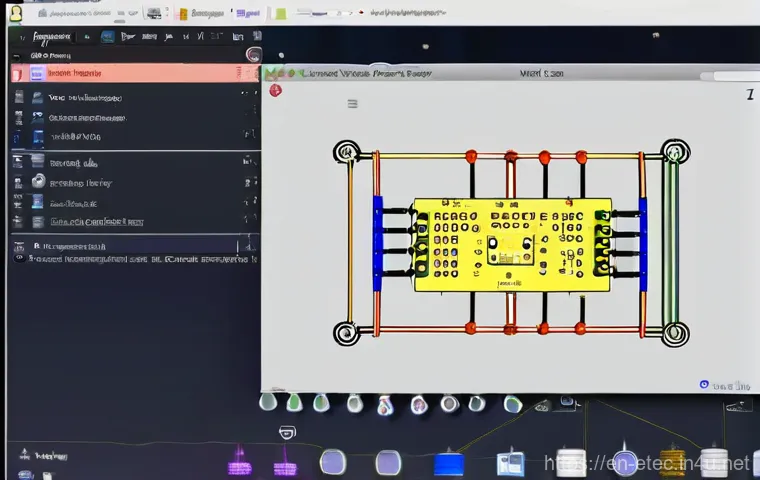
When it comes to my personal recommendations, I’ve developed a few strong favorites that have consistently served me well throughout my journey. For general circuit simulation, especially analog, I can’t speak highly enough of LTSpice.
It’s free, incredibly powerful, and has a massive community for support. Yes, the interface can be a bit old-school, but once you get past that, its accuracy is top-tier.
For digital and mixed-signal simulations, particularly when incorporating microcontrollers, Proteus Design Suite is my absolute champion. The ability to simulate popular microcontrollers like PICs, Arduinos, and ARM processors alongside your circuit is just phenomenal.
Then there’s Tinkercad Circuits – it’s web-based, super intuitive, and perfect for absolute beginners or quick prototyping of basic concepts. It’s like the LEGOs of electronics simulation.
Lastly, for PCB design simulation integration, I often lean on tools like Altium Designer or KiCad (for open-source fans) as they often include integrated simulation capabilities to verify layouts before fabrication.
| Simulator | Primary Use | Key Features | Learning Curve |
|---|---|---|---|
| LTSpice | Analog Circuit Simulation, SPICE | Highly accurate, large component library, transient/AC/DC analysis, free. | Medium (interface can be dated) |
| Proteus Design Suite | Embedded Systems, Microcontroller Simulation | Co-simulation of MCU code & hardware, extensive component models, virtual instruments. | Medium to High |
| Tinkercad Circuits | Basic Electronics, Arduino Simulation | Web-based, intuitive drag-and-drop, real-time simulation, good for beginners. | Low |
| Multisim | Educational & Professional Circuit Design | Comprehensive component library, easy-to-use interface, good for academic use. | Medium |
Beyond Simulation: Complementary Tools for Success
While simulation software is at the core of practical exam preparation, there are other tools that, for me, have been equally vital. For example, a good schematic capture and PCB layout tool is essential, even if you’re not fabricating boards.
I’ve found that actually drawing out a schematic in a professional tool like KiCad or Eagle forces a level of detail and organization that you might miss just sketching things on paper.
Then there are online resources: datasheets, application notes, and forums are goldmines of information. When I’m stuck on a tricky component, I immediately hit up the manufacturer’s datasheet or browse an engineering forum for similar issues.
And don’t forget programming environments like Arduino IDE or VS Code with relevant extensions if your exam involves microcontrollers. The synergy of these tools – simulation for testing, schematic capture for organization, datasheets for deep dives, and programming environments for code development – creates a holistic preparation strategy that leaves no stone unturned.
From Screen to Success: Bridging the Simulation-Real World Gap
Okay, here’s the thing that often gets overlooked: simulation is awesome, but it’s not the *entire* picture. It’s a powerful training ground, but eventually, you have to step onto the actual battlefield – the practical exam.
I’ve seen so many people ace simulations only to freeze up when faced with actual wires, resistors, and that unmistakable smell of hot solder. It’s a completely different sensory experience, and that transition requires its own specific kind of preparation.
My own journey involved countless hours moving between the virtual and physical, constantly validating one against the other. The goal isn’t to abandon simulation when you get to the real hardware; it’s to use it to inform and optimize your physical interactions, making you more confident and efficient.
You want to feel like you’ve already ‘built’ the circuit a hundred times in your mind and through simulation before you ever touch a component.
The Art of Physical Prototyping (Even for a Simulation-Heavy Exam)
Even if your exam is heavily focused on simulations, incorporating some physical prototyping into your study routine is incredibly beneficial. For me, it’s about building that muscle memory.
Learning to correctly strip a wire, identify component values by sight, properly insert components into a breadboard, and execute clean solder joints are skills that simulation simply can’t teach.
I used to keep a small prototyping kit next to my computer – a breadboard, some basic resistors, capacitors, LEDs, and a microcontroller. After successfully simulating a circuit, I’d often try to build a simplified version of it physically.
This hands-on experience exposes you to the real-world quirks: components that look similar but have different values, finicky breadboard connections, or the sheer frustration of a cold solder joint.
These are the details that distinguish a truly competent technician from someone who can only work in the abstract.
Developing Real-World Troubleshooting Intuition
This is perhaps the most critical bridge to build. Simulation provides perfect signals and ideal components, but real-world circuits are messy. Wires have resistance, power supplies have ripple, and every component has a tolerance.
The intuition you gain from observing real-world phenomena is invaluable. For example, if your LED isn’t lighting up in simulation, it’s usually a logic error.
If it’s not lighting up on a breadboard, it could be a reverse polarity, a faulty LED, a bad connection, or even a dead battery. I remember struggling with an op-amp circuit that worked perfectly in Multisim, but hummed loudly on my bench.
It turned out to be inadequate power supply decoupling, something that often isn’t explicitly modeled in basic simulations. By physically testing your simulated designs, you start to develop that ‘gut feeling’ for common real-world issues, making you a much more effective troubleshooter during that intense practical exam.
Your Secret Weapon: Strategic Practice and Feedback
Let’s face it, simply doing something over and over isn’t always the most efficient way to learn. There’s a difference between mindless repetition and *strategic* practice.
When it comes to acing those practical electronics exams, especially with simulations, your approach to practice is what separates the confident masters from the nervous novices.
I’ve always found that the most effective learning happens when you’re not just executing tasks, but actively reflecting on your process and seeking constructive criticism.
It’s like a sports athlete reviewing game footage – you’re looking for patterns, identifying weaknesses, and refining your technique. This isn’t just about understanding electronics; it’s about understanding *yourself* as an engineer or technician and how you best learn and perform under pressure.
Deliberate Practice and Scenario-Based Learning
Throwing yourself into random simulation exercises is better than nothing, but deliberate practice is where you truly supercharge your skills. This means not just doing what’s comfortable, but actively seeking out and tackling your weak areas.
Did you struggle with filter design in your last practice session? Spend extra time simulating different filter types and analyzing their frequency responses.
Is a particular microcontroller peripheral giving you grief? Dedicate specific sessions to writing and simulating code for just that peripheral. I often create “worst-case scenario” simulations for myself – what happens if a sensor fails?
What if the power supply drops briefly? This type of scenario-based learning pushes you beyond basic functionality, forcing you to think critically and adapt.
It’s about building resilience and problem-solving muscle memory, making you unflappable when unexpected challenges arise during the actual exam.
Leveraging Peer Review and Expert Feedback
This is a huge one, and something I truly believe accelerates learning like nothing else. It’s easy to get tunnel vision when you’re working alone in a simulator.
You might overlook a subtle error or an inefficient design choice simply because you’re too close to the problem. That’s where external feedback becomes invaluable.
If you have classmates or mentors, share your simulated circuits and code with them. Ask them to poke holes in your design, challenge your assumptions, or suggest alternative approaches.
I used to regularly trade simulated projects with a study buddy; we’d each try to break the other’s circuit, and then explain our thought process. The discussions that followed were always incredibly insightful.
If direct peer review isn’t an option, leverage online forums or communities dedicated to electronics. Present your simulated problem, explain your approach, and be open to constructive criticism.
The diverse perspectives you gain can illuminate blind spots and introduce you to new, more elegant solutions you might never have considered on your own.
Wrapping Things Up
So, there you have it, folks! My deep dive into the incredible world of electronic simulation and how it can literally transform your practical exam prep. It’s been quite a journey, hasn’t it? From those initial moments of confusion to confidently debugging complex circuits in a virtual environment, simulation offers a unique blend of learning, experimentation, and critical thinking. Remember, it’s not just about passing an exam; it’s about building a robust foundation of understanding and intuition that will serve you throughout your entire career. Trust me, the confidence you gain by knowing you’ve thoroughly tested and understood your designs will be your greatest asset when facing any real-world challenge. Keep practicing, keep experimenting, and most importantly, keep learning!
Handy Tips You’ll Wish You Knew Sooner
When you’re navigating the exhilarating, sometimes frustrating, landscape of electronics and practical exams, having a few clever shortcuts and insights can make all the difference. These aren’t just theoretical nuggets; they’re battle-tested wisdom from countless hours in front of a screen and with a soldering iron in hand. Think of these as your little secret weapons, designed to streamline your learning, boost your efficiency, and help you avoid those pesky pitfalls that can eat up precious time. They’ll help you focus your energy where it truly counts, ensuring you’re not just practicing, but practicing *smartly* for whatever challenges come your way.
Quick Hacks for Simulation Success
1. Start Simple, Scale Up: Don’t try to simulate an entire space shuttle on day one! Begin with basic circuits like LED blinkers or simple logic gates. Master the fundamentals of your chosen simulator, then gradually layer on complexity. This builds confidence and prevents overwhelming frustration.
2. Leverage Analysis Tools: Your simulator isn’t just for building; it’s for analyzing. Spend time learning how to use the oscilloscope, function generator, and various analysis modes (transient, AC sweep, DC sweep). Visualizing waveforms and data is key to understanding circuit behavior.
3. Bridging the Physical Gap: Whenever possible, try to build a simplified physical version of a circuit you’ve simulated. This helps you understand real-world component tolerances, parasitic effects, and the nuances of physical connections that simulations might idealize.
4. Seek Constructive Criticism: Don’t be a lone wolf! Share your simulated designs or code with peers, instructors, or online communities. A fresh pair of eyes can spot errors you’ve overlooked or suggest more efficient solutions, dramatically accelerating your learning.
5. Know Your Simulator’s Limits: Understand that simulators are models, not perfect replicas of reality. Real-world components have variations, wires have resistance, and power supplies have ripple. Factor these imperfections into your design considerations to avoid surprises when you transition to actual hardware.
Key Takeaways for Your Electronics Journey
Alright, let’s bring it all home and condense the absolute essentials for conquering those practical electronics exams with the power of simulation. If you take away anything from our chat today, let it be these core principles. They’re the foundation upon which you’ll build your expertise, minimize stress, and maximize your chances of success, whether it’s in an exam hall or out in the professional world. These aren’t just tips; they’re a mindset, a strategic approach to learning that emphasizes hands-on exploration and critical thinking, ensuring you’re not just memorizing, but truly understanding the ‘how’ and ‘why’ behind every circuit you design.
Your Blueprint for Success
- Embrace Simulation as Your Training Ground: View your simulator as a risk-free environment where mistakes are learning opportunities, not costly failures. It’s where you build intuition and confidence without fear.
- Master Your Chosen Tool: Spend time truly understanding the features and settings of your simulator. The more fluent you are with the software, the more effectively you can design, test, and troubleshoot.
- Anticipate and Avoid Pitfalls: Be aware of common simulation errors, especially configuration mistakes and the discrepancies between ideal simulated conditions and real-world imperfections.
- Go Beyond Basics with Advanced Techniques: Don’t just make circuits work; stress test them, analyze boundary conditions, and integrate code where applicable. Push your designs to their limits virtually.
- Bridge to the Real World: Supplement simulation with physical prototyping to develop muscle memory and real-world troubleshooting intuition. The synergy between virtual and physical is unstoppable.
- Practice Strategically and Seek Feedback: Engage in deliberate practice, tackle your weaknesses, and actively seek peer or expert review. Fresh perspectives are invaluable for refining your skills and accelerating your learning.
Frequently Asked Questions (FAQ) 📖
Q: What are the absolute must-have simulation tools or platforms for anyone serious about acing their electronics practical exams?
A: Oh, this is such a brilliant question! When I first started out, I felt completely overwhelmed by all the options, but trust me, finding the right simulation tools is like finding your secret weapon for those practicals.
From my own journey, the big players you absolutely need to know are LTspice, PSpice, and Multisim. LTspice, which is free and incredibly powerful, was my go-to for analog circuits.
It’s super efficient and the user interface, while it takes a minute to get used to, is so robust for detailed analysis. It really helped me understand things like op-amps and filter designs down to their core.
Then there’s PSpice, a true industry standard. It offers a comprehensive environment, especially for analog and mixed-signal simulations, and getting familiar with it definitely gives you a leg up, showing you’re serious about the field.
And for something a bit more visually intuitive, especially if you’re just starting or love a good online platform, Multisim Live is fantastic. It’s free, web-based, and makes learning circuit behavior incredibly interactive and engaging.
I remember spending hours just playing around with Falstad’s web simulator too – it’s like a digital sandbox for circuits and really helps you visualize current flow and voltage drops in real-time.
These tools aren’t just for ‘passing’; they’re for truly understanding how components interact and behave, saving you a ton of stress and even some burnt fingers down the line!
Q: Okay, I’ve got a simulator. Now, how do I actually use it effectively to prepare?
A: ny specific strategies beyond just building circuits? A2: That’s where the magic really happens! Just throwing components onto a virtual breadboard isn’t enough; you need a strategy.
What I found game-changing was treating my simulator like a virtual troubleshooting lab. Instead of just verifying a circuit works, try introducing “faults” intentionally.
What happens if a resistor value is off by 20%? Or a capacitor leaks? Simulating these real-world scenarios forces you to think like a seasoned engineer, diagnosing issues before they ever become physical problems.
Seriously, this proactive troubleshooting saved me so many headaches. Another trick I swear by is iterative design. Don’t be afraid to experiment!
Simulations make it incredibly easy and cost-effective to modify components, vary voltages, or swap out different configurations, helping you deeply understand how each change impacts the circuit’s performance.
I mean, in the real world, prototyping can get expensive fast, but in a simulator, it’s virtually free experimentation! Plus, make sure you’re using the built-in analysis tools.
Most simulators offer features like transient analysis, AC sweeps, and Fourier analysis. Learning to interpret these graphs is crucial, as they give you insights into frequency response, signal integrity, and overall circuit stability that you simply can’t get from just measuring voltage with a multimeter.
It’s all about pushing beyond just ‘does it work?’ to ‘how does it really work, and why?’.
Q: What are some common pitfalls or unexpected challenges students face when relying on simulations, and how can we cleverly sidestep them to ensure real-world success?
A: Ah, the classic trap! While simulations are an absolute godsend, they’re not a perfect crystal ball, and this is where experience truly shines. One of the biggest pitfalls I’ve seen, and definitely experienced myself, is over-reliance on the simulator without enough hands-on experience.
It’s easy to get complacent when everything works perfectly in a pristine virtual environment. But in the real world, you’ve got parasitic elements, unexpected noise, component tolerances, and even just plain messy wiring that can throw a wrench in your perfectly simulated design.
My advice? Always, always bridge the gap. After you nail a design in the simulator, try to build a simplified version on a breadboard.
Even just seeing how the physical components behave and how your measurements might deviate from the simulation can teach you volumes. Another huge mistake is skipping proper documentation.
I know, I know, it sounds boring, but a well-documented schematic and clear notes on your simulation parameters are gold when you’re troubleshooting or coming back to a project later.
Lastly, don’t underestimate the foundational theory. Simulations are powerful, but they won’t teach you Ohm’s Law or Kirchhoff’s principles if you don’t grasp them first.
I remember getting stuck because I was just blindly following tutorials without really understanding why certain connections were made. Make sure to systematically learn basic components first, before jumping into complex designs.
The simulator is a fantastic tool, but your brain is still the ultimate processor! Keep that critical thinking engaged, and you’ll be unstoppable.