We all take the flick of a light switch for granted, expecting instant power without a second thought. But beneath that simple action lies an incredibly complex and dynamic world: the realm of power system theory.
As someone who has personally navigated the intricate blueprints of electrical grids and witnessed the monumental shifts happening in energy, I can tell you it’s far more than just circuits and calculations.
We’re talking about the backbone of modern society, a living, breathing network constantly adapting to unprecedented challenges. With the rapid integration of renewable energy sources, the urgent demand for smarter, more resilient grids, and the ever-present need for reliable power in an increasingly electrified world, understanding the fundamental principles of how electricity is generated, transmitted, and distributed has never been more critical.
It’s a field that’s not just about what powers us today, but what will shape our entire energy future, from mitigating climate change to preventing widespread blackouts.
If you’re curious about the unseen forces that literally light up your life and drive our technological progress, then you’re in for a treat. Let’s dive deeper into it below and uncover the fascinating secrets!
The Silent Symphony: How Power Gets to You
From Powerhouse to Outlet: The Long Journey Begins
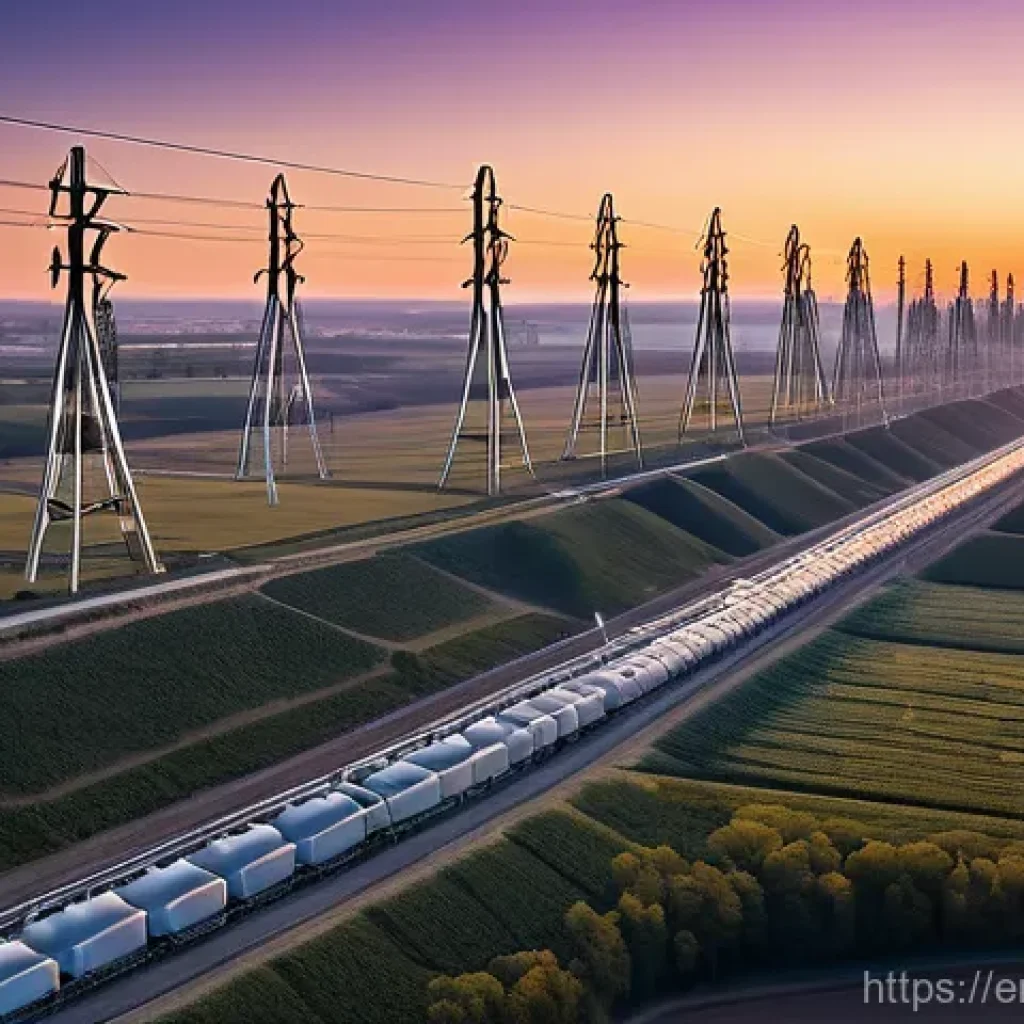
You know, for most of us, electricity is just *there*. We flip a switch, and boom—lights, coffee, Netflix. But having spent years diving into the nitty-gritty of power systems, I can tell you it’s a meticulously choreographed dance, a silent symphony playing out across thousands of miles. It all kicks off at the generation source, whether it’s a colossal coal plant, a towering wind turbine, or the quiet hum of a nuclear reactor. Each of these powerhouses generates electricity, but not in a way that’s ready for your home. It’s usually produced at a relatively low voltage. That’s where the magic of transformers comes in, stepping up that voltage to incredibly high levels for efficient transmission across vast distances. Imagine trying to push a huge volume of water through a narrow pipe – you need immense pressure. Similarly, high voltage minimizes energy loss as electricity journeys through massive transmission lines, those iconic steel towers marching across the landscape, often stretching hundreds of miles across states and even countries. The sheer scale of this initial leg of the journey is something that never ceases to impress me, a testament to fundamental physics and masterful engineering.
The Local Delivery: Guiding Power to Your Doorstep
Once that high-voltage power has traveled its long journey, it can’t simply be dumped straight into your home’s wiring. That would be, to put it mildly, catastrophic! So, as it reaches a substation near populated areas – perhaps one you’ve driven past countless times without a second thought – another set of specialized transformers takes over. These act as the next stage of the delivery service, stepping the voltage down significantly to levels that are safer and more manageable for distribution. From these substations, the power branches out into distribution networks, which I like to think of as the local roads and streets of the electrical world. These are the lines you see on poles in your neighborhood, or increasingly, buried underground for aesthetic and resilience reasons. They run directly to your house, your office, every shop on Main Street, and every facility in industrial parks. The journey is incredibly complex, requiring constant balancing acts to ensure that the supply perfectly matches the demand, every single second of every single day. It’s a truly awe-inspiring feat of engineering that we often overlook, a testament to human ingenuity in keeping our modern lives humming along with uninterrupted power.
The Generation Game: Where Our Power Comes From
Traditional Pillars: The Backbone of Our Energy
When I first started in this field, the sheer diversity of power generation methods blew my mind. It’s not just a one-size-fits-all approach. For decades, fossil fuels like coal and natural gas have been the heavy hitters, providing a reliable, dispatchable power source that can be ramped up or down almost on demand. I’ve seen some of these plants up close, and the scale is just immense – truly industrial marvels, though not without their environmental footprints. Nuclear power, with its incredible energy density and zero carbon emissions during operation, also plays a crucial role in many countries, delivering consistent base load power. While it comes with its own set of complexities, from fuel sourcing to waste disposal and stringent safety regulations, its contribution to a stable grid is undeniable. And then, there are the massive hydro dams, harnessing the raw, consistent power of rivers, providing a stable, often renewable, and flexible base load that can respond quickly to changes in demand. These traditional sources have literally powered our progress for generations, forming the very foundation of our energy infrastructure.
The Rising Stars: Renewables Reshaping the Landscape
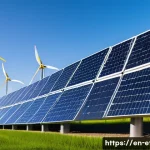
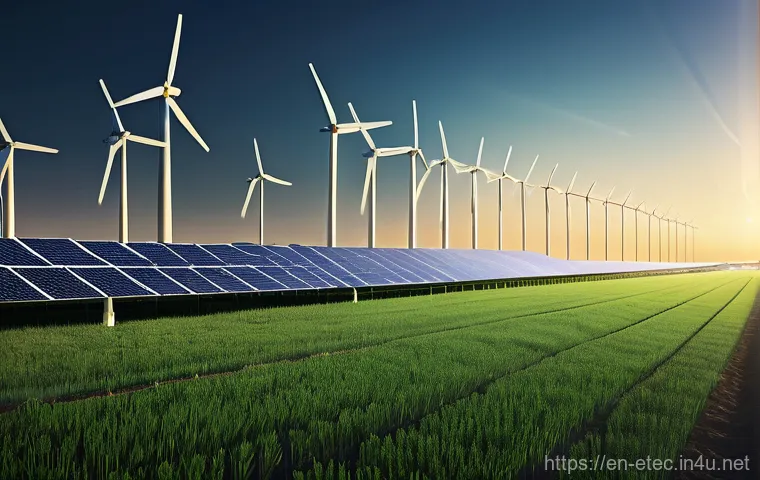
But the energy landscape is changing, and boy, is it changing fast! The rapid rise of renewables – solar and wind, in particular – is fundamentally reshaping how we generate electricity. I remember the skepticism surrounding renewables just a decade or two ago, dismissed by some as fringe technologies, but now, they’re becoming major players, often surpassing traditional sources in terms of new capacity additions globally. We’re seeing massive utility-scale solar farms sprawling across sun-drenched plains and deserts, and towering wind turbines gracefully dotting coastlines and open fields, harnessing nature’s forces. Geothermal plants tap into the Earth’s own heat, and biomass converts organic matter into energy, closing the loop on waste. It’s a fascinating mix, each with its own advantages and challenges, and the continuous innovation in these areas is something I personally find incredibly exciting. We’re moving towards a much more diversified, and hopefully, sustainable, energy portfolio, pushing the boundaries of what’s possible in clean power generation and ushering in a new era of energy production.
Rethinking the Grid: The Green Energy Revolution
Integrating Intermittent Power: A Modern Challenge
Let’s be honest, the old grid wasn’t really built with intermittent renewable energy in mind. It was designed for large, centralized power plants pushing electricity one way, with predictable output. But as someone who’s watched this transition unfold firsthand, I can tell you, the integration of renewables like solar and wind isn’t just an engineering challenge; it’s a complete paradigm shift. Imagine trying to balance a massive seesaw where one side keeps randomly getting heavier or lighter depending on whether the sun is shining or the wind is blowing. That’s a bit like managing a grid with significant amounts of wind and solar, which are inherently dependent on fluctuating weather patterns. When the sun shines brightly or the wind blows steadily, we get a surge of clean power, which is fantastic! But what happens when clouds roll in unexpectedly, or the wind suddenly dies down? This variability demands incredibly sophisticated solutions to maintain a stable and reliable power supply, a problem that engineers are tackling head-on with impressive ingenuity.
Innovative Solutions for Grid Stability and Storage
This is where innovation truly shines. To counter the intermittency, we’re talking about massive battery storage projects, often co-located directly with solar farms or wind facilities, that can store excess energy during periods of high generation and then release it precisely when needed. It’s like having a giant electrical reservoir, ready to fill gaps. There’s also the push for grid-scale hydrogen production and storage, turning surplus renewable electricity into a storable, versatile fuel that can later be converted back to electricity. I’ve been particularly impressed by advancements in forecasting technologies, using AI and machine learning to predict renewable output with increasing accuracy, giving grid operators a better heads-up on what’s coming. It’s about creating a more flexible, responsive grid that can gracefully handle these fluctuations, rather than being overwhelmed by them. This green energy revolution isn’t just about cleaner power; it’s about fundamentally redesigning the nervous system of our modern world to be more resilient, sustainable, and frankly, smarter. It’s a massive undertaking, but the progress I’ve seen is truly inspiring and gives me immense hope for our future energy security.
The Brains of the Operation: Smart Grids and Digitalization
Beyond Basic Delivery: Intelligence in the Wires
If the traditional power grid was akin to a basic postal service, a smart grid is like express delivery with real-time tracking, optimized routes, and predictive analytics. From my vantage point in the energy sector, the shift towards digitalization has been nothing short of transformative. A smart grid isn’t just a buzzword; it’s a network that uses advanced digital communication technology to detect and react to local changes in usage and supply with unprecedented speed and accuracy. Think about it: traditional grids often rely on manual readings, human inspection, and a largely reactive approach to outages and inefficiencies. A smart grid, however, can pinpoint problems almost instantly, isolate affected areas, and even automatically reroute power to bypass faults and minimize disruptions. This significantly improves reliability, something we all take for granted until the power goes out, and it allows for much more proactive maintenance, addressing issues before they become critical failures. It’s a leap forward in operational intelligence.
Empowering Consumers and Integrating New Tech
Moreover, smart grids empower consumers in ways we couldn’t have imagined a couple of decades ago, shifting us from passive recipients to active participants in the energy ecosystem. Smart meters, for instance, don’t just record total consumption; they can provide granular, real-time data, allowing you to monitor your energy use hour by hour and even adjust your habits to save money during peak pricing periods. I’ve experimented with this myself, using apps linked to my smart meter, and it’s amazing how a little data and awareness can change your consumption patterns, often leading to noticeable savings on monthly bills. This digital backbone also facilitates the seamless integration of distributed energy resources (DERs), like rooftop solar panels on homes or even electric vehicles that can feed power back into the grid during high demand, acting as a virtual power plant. It’s creating a dynamic, two-way street for electricity flow, making the entire system much more interactive, efficient, and responsive. This isn’t just an upgrade; it’s a complete reimagining of our electrical infrastructure for the 21st century, making it more flexible and future-ready for generations to come.
Keeping the Lights On: Reliability in a Shifting Landscape
Maintaining Stability: The Grid’s Delicate Balance
Reliability, for me, is the ultimate measure of a robust power system. It’s about ensuring that when you hit that switch, the lights *always* come on, and stay on. In my career, I’ve seen the immense pressure and intricate planning that goes into maintaining this constant availability, especially now with so many variables entering the equation. One of the biggest challenges is maintaining grid stability. Imagine an incredibly complex orchestra where every instrument – every generator, every transmission line – needs to play in perfect sync. The grid is similar; the frequency (the “beat” or cycles per second of the alternating current) needs to be maintained within a very narrow band to prevent equipment damage and widespread outages. The dynamic and often unpredictable nature of renewables makes this balancing act even more demanding, requiring highly sophisticated control systems and faster response times from grid operators and automated systems. It’s a continuous, real-time battle against disruptions, requiring constant vigilance and instantaneous adjustments.
Building Resilience: Protecting Against the Unforeseen
Another critical aspect is resilience – the grid’s ability to withstand and quickly recover from major disturbances. We’re talking about everything from increasingly severe weather events, which seem to be growing in intensity and frequency due to climate change, to sophisticated cyberattacks targeting critical infrastructure. I’ve personally been involved in discussions around hardening infrastructure against storms, using things like undergrounding power lines where feasible, deploying advanced sensors to detect anomalies before they become critical failures, and enhancing cybersecurity protocols. It’s an ongoing battle, a continuous arms race to protect our vital energy lifeline. The focus on predictive maintenance, creating redundancy in the system (having multiple ways to deliver power), and developing rapid restoration protocols is stronger than ever. The goal is to build a grid that isn’t just strong, but smart and agile enough to bounce back quickly and effectively from whatever challenges Mother Nature or malicious actors throw its way, ensuring minimal disruption to our daily lives and critical services.
Beyond the Wires: The Economic Pulse of Power
The Cost of Keeping the Lights On
It’s easy to think of power systems purely in terms of engineering and technology, but what I’ve learned over the years is that the economics are just as crucial, if not more so, in driving decisions, investments, and ultimately, our energy future. The cost of electricity, how it’s traded in wholesale markets, and the vast capital investments flowing into the sector have a profound impact on everything, from our household budgets to national economies and industrial competitiveness. We often see headlines about rising energy bills, and these are directly linked to the complex interplay of fuel costs, the colossal infrastructure investment required to build and maintain the grid, and the various market regulations that govern pricing. For instance, the global price of natural gas, a major fuel for electricity generation in many regions, can fluctuate wildly based on geopolitical events, global supply and demand, directly affecting our electricity costs and sometimes leading to significant bill shocks for consumers. This intricate dance of supply, demand, and policy profoundly shapes our energy landscape.
Market Forces and the Green Transition
The transition to clean energy also presents a fascinating economic challenge and opportunity that’s reshaping entire industries. While the upfront costs of building new wind and solar farms can be significant, especially for large utility-scale projects, the “fuel” (sun and wind) is essentially free once the infrastructure is in place, leading to much lower operating costs over the long term. This creates an interesting dynamic with traditional fossil fuel plants, whose operational costs are highly dependent on fluctuating fuel prices. Then there are the carbon markets, carbon taxes, and various government incentives designed to encourage cleaner power generation, adding another layer of complexity to pricing models and investment decisions for power companies. From the perspective of a consumer, understanding the factors that influence your electricity bill – things like the generation mix in your region, the costs of grid maintenance and upgrades, and various regulatory charges – can be incredibly empowering. It’s a complex world where megawatt-hours translate directly into dollars and cents, shaping our daily lives more than many of us realize, and it’s always evolving with new market mechanisms and technologies.
| Aspect | Description | Why It Matters |
|---|---|---|
| Renewable Integration | Incorporating intermittent sources like solar and wind into the grid, requiring advanced management. | Crucial for decarbonization, combating climate change, and achieving energy independence. |
| Smart Grid Technology | Digitalizing the electrical network for two-way communication, real-time data, and automated responses. | Enhances grid reliability, operational efficiency, and empowers consumers with data and control. |
| Energy Storage Solutions | Technologies, primarily large-scale batteries, designed to store excess electricity for later use. | Balances supply and demand, particularly crucial for integrating variable renewable energy sources. |
| Grid Resilience & Security | The ability of the power system to withstand and quickly recover from physical and cyber threats. | Ensures continuous, stable power supply during adverse events, protecting critical services. |
| Market Dynamics & Economics | The complex interplay of economic factors, regulatory frameworks, and electricity trading mechanisms. | Directly impacts consumer costs, influences investment in new infrastructure, and shapes fuel choices. |
Future-Proofing Our Energy: Innovations on the Horizon
Breakthroughs in Transmission and Storage
Looking ahead, the pace of innovation in power systems is truly exhilarating, and honestly, it gives me a lot of hope for our energy future. We’re not just incrementally improving things; we’re seeing entirely new frontiers opening up in how we transmit and store energy. One area that I’m particularly excited about is the development of advanced grid materials – think superconductors that could transmit electricity with virtually no loss over vast distances, dramatically improving efficiency and reducing infrastructure costs. There’s also incredible research into self-healing materials that can repair themselves after minor damage, significantly cutting down on maintenance and outage times. These aren’t just theoretical concepts anymore; they’re moving closer to real-world applications, and witnessing this progress from industry insiders is absolutely captivating. Imagine the fundamental shift these technologies could bring to grid design and operation, making our electrical infrastructure smarter and more robust than ever before!
AI, Microgrids, and a Decentralized Future
Then there’s the burgeoning field of AI and machine learning, which is becoming absolutely indispensable to the future of power systems. Beyond just forecasting renewable output, AI is being deployed to optimize power flow in real-time across complex networks, predict equipment failures before they happen, and even manage vast networks of distributed energy resources like electric vehicle charging stations and home solar arrays with battery storage. I’ve seen some incredible simulations that show how AI can make the grid far more adaptive, efficient, and resilient than any human operator ever could alone. And let’s not forget about microgrids – smaller, localized grids that can operate independently if the main grid goes down, offering enhanced resilience for critical facilities, military bases, or entire communities. These innovations aren’t just about keeping the lights on; they’re about building a fundamentally better, more sustainable, and more secure energy future for generations to come, creating a more decentralized yet interconnected system. It’s a field brimming with possibility, and I feel privileged to witness it unfold and contribute to its understanding.
My Personal Take: Why This Matters More Than Ever
The Unseen Backbone of Modern Life
Having spent a good chunk of my career immersed in the world of power systems, I can genuinely say that its importance only grows with each passing year. It’s not an abstract concept confined to dusty textbooks; it’s the invisible force that underpins nearly every aspect of our modern lives. From the moment you brew your morning coffee, check your smartphone, to the instant message you send across continents, electricity is intricately at play. The sheer interconnectedness of it all, and the constant, relentless effort required by countless dedicated professionals to keep it running smoothly, is something I find profoundly fascinating and deeply critical. We’re not just talking about engineering marvels; we’re talking about national security, economic stability, and our collective ability to tackle global challenges like climate change and poverty. Without a reliable power system, modern society as we know it simply grinds to a halt. This foundational dependency is why understanding it is so crucial for everyone.
A Dynamic Field with Limitless Potential
What I’ve personally experienced is a shift from a somewhat static, predictable industry to one that’s incredibly dynamic, innovative, and frankly, a bit thrilling. The challenges facing power systems today are monumental – integrating ever more renewables, protecting against sophisticated cyber threats and physical attacks, and upgrading vast, aging infrastructure across continents – but the solutions being developed are equally impressive and often groundbreaking. It truly feels like we are at a pivotal moment, reimagining how we generate, deliver, and consume energy from the ground up. For anyone out there curious about making a real impact, pursuing a career in a field that genuinely shapes the future, or simply wanting to understand the hidden infrastructure that powers everything, I hope this deep dive sheds some valuable light. It’s a world full of complex equations and massive machinery, but at its heart, it’s about ensuring that everyone has access to that simple, indispensable flick of a switch, illuminating lives and driving progress worldwide. The potential for future advancements is truly limitless, making it an incredibly exciting area to watch.
Wrapping Up
And there you have it, folks! What often feels like an invisible force is, in reality, a meticulously engineered and constantly evolving system, powered by incredible innovation and countless dedicated individuals. As we navigate a world increasingly dependent on electricity, understanding its journey from generation to your outlet isn’t just academic; it’s about empowering ourselves to be more conscious consumers, more prepared citizens, and active participants in shaping our energy future. I hope this deep dive into the fascinating world of power systems has given you a newfound appreciation for the silent symphony playing out behind every flick of a switch, and perhaps even sparked a bit of curiosity about where our energy journey will take us next.
Good-to-Know Info
Here are a few quick tips and insights I’ve picked up over the years that might just save you a headache or help you get more out of your energy:
1. Understanding Peak Hours Can Save You Money: Many utility companies offer time-of-use (TOU) pricing, meaning electricity costs more during “peak” demand times (e.g., late afternoon/early evening) and less during “off-peak” hours. Adjusting your high-energy activities like running the dishwasher or doing laundry to off-peak times can significantly reduce your monthly bill. I’ve personally seen a noticeable difference by just shifting my routine a bit!
2. Invest in a Smart Power Strip: These aren’t just fancy gadgets; they’re incredibly practical. They can cut power to devices that go into standby mode, eliminating “vampire drain” – the electricity your electronics consume even when turned off. It’s a small change, but over time, it adds up to real savings and a tiny step towards greater efficiency for your home.
3. Keep an Eye on Your Home’s Insulation: This might sound basic, but a well-insulated home is your best friend for energy efficiency. Gaps around windows, doors, and in your attic can lead to significant heat loss in winter and heat gain in summer, forcing your HVAC system to work overtime. A quick check and some weatherstripping can make a world of difference in your comfort and your energy consumption.
4. Prepare for Power Outages: It’s not a matter of if, but when. Always have an emergency kit ready with flashlights, extra batteries, a portable charger for your phone, and possibly a battery-powered radio. Knowing where your main circuit breaker is and how to turn it off safely is also crucial for certain emergencies. A little preparation goes a long way in minimizing stress when the lights unexpectedly go out.
5. Consider Energy Audits: Many utility providers offer free or low-cost home energy audits. Professionals will come to your home and identify areas where you’re losing energy, offering tailored recommendations for improvements. I always recommend this to friends and family; it’s an eye-opener and often points out issues you’d never spot yourself, helping you make targeted improvements that really pay off.
Key Takeaways
At its core, our modern power system is a marvel of human ingenuity, constantly evolving to meet escalating demands and embrace sustainable practices. It’s a complex interplay of generation, transmission, distribution, and smart technologies, all working in concert to deliver reliable power. Understanding this intricate network empowers us to make smarter energy choices, contribute to a greener future, and appreciate the foundational role electricity plays in every facet of our lives. The journey towards a more resilient and sustainable energy landscape is ongoing, driven by continuous innovation and a collective commitment to progress.
Frequently Asked Questions (FAQ) 📖
Q: Why is integrating renewable energy into our existing power grids such a big deal, and what are the main hurdles we’re facing?
A: Oh, this is a fantastic question, and honestly, it’s one of the most dynamic areas in power systems today! We’re all excited about solar panels on our roofs and massive wind farms, right?
But the thing is, our traditional power grids were built for big, centralized power plants, often running on fossil fuels, that you could pretty much turn up or down as needed.
Think of it like a perfectly choreographed dance where everyone knows their steps. Now, with renewables, it’s like suddenly inviting a bunch of incredibly talented but unpredictable freestyle dancers to the party.
Solar only works when the sun shines, and wind turbines need, well, wind. This “intermittency” is a massive headache for grid operators because they need a constant, perfectly balanced supply and demand.
If the sun suddenly ducks behind clouds over a large solar farm, or the wind drops, that’s a huge chunk of power disappearing instantly. My personal experience navigating these challenges has shown me that it’s not just about generating clean power; it’s about making sure that clean power actually gets to your home reliably without causing blackouts.
The main hurdles? First, that intermittency I just mentioned – how do we store excess energy when it’s plentiful so we can use it when it’s not? That’s where battery storage comes in, but it’s still evolving and can be pricey.
Second, grid stability: renewables can sometimes introduce fluctuations that our older infrastructure isn’t designed to handle, potentially causing system instability.
And third, transmitting power: wind farms are often in remote, windy areas, and huge solar fields need vast amounts of sunny land, meaning we need to build entirely new, often very long, transmission lines to get that power to cities.
It’s a huge, exciting puzzle, and honestly, the innovations happening to solve these issues are nothing short of incredible.
Q: We hear a lot about “smart grids.” What exactly are they, and how will they actually make our lives better and prevent those dreaded blackouts?
A: Ah, smart grids! This is where the future truly gets exciting, and I’ve personally seen how much potential they hold. Imagine your current power grid as a one-way street: electricity flows from the power plant to your home, and that’s pretty much it.
A smart grid, on the other hand, is like turning that one-way street into a super-highway with real-time, two-way communication. It’s essentially digitizing and modernizing our electrical infrastructure by integrating advanced sensors, communication technologies, and intelligent controls.
Instead of just reacting to problems, a smart grid is proactive. From my perspective working within the energy sector, this intelligence is a game-changer.
How does it make our lives better? For starters, it significantly improves reliability. If a tree branch falls on a power line, a smart grid can detect the fault much faster, isolate the damaged section, and even reroute power around it to minimize the affected area and shorten outage times.
No more waiting hours for crews to physically locate the problem! It also boosts efficiency. Think of less wasted energy during transmission and distribution.
For you, the consumer, it opens doors to things like smart meters that give you real-time data on your energy usage, allowing you to make smarter choices and potentially save money.
You might even be able to sell excess power back to the grid from your home solar panels more easily. And blackouts? While no system is ever 100% foolproof, smart grids are designed with resilience in mind, making them much more robust against everything from extreme weather to cyberattacks.
They essentially make our entire power system more nimble, responsive, and ultimately, far more dependable.
Q: Beyond just keeping our lights on, why is understanding power system theory so crucial right now, especially with all the talk about climate change and new technologies?
A: This is a brilliant observation, and it really hits at the heart of why I’m so passionate about this field! While keeping our lights on is undeniably paramount, understanding power system theory today goes so much deeper than just basic functionality.
For me, it’s about building the literal foundation of our future. With climate change breathing down our necks, there’s a global imperative to decarbonize our energy supply.
This means not just bringing more renewables online, but fundamentally rethinking how we generate, deliver, and even use electricity. Power system theory is the roadmap for this massive transformation.
It’s what allows us to integrate those intermittent renewables gracefully, develop robust energy storage solutions, and design grids that can handle the unpredictability of a changing climate.
Furthermore, consider the explosion of new technologies: electric vehicles are becoming commonplace, homes are getting smarter with integrated energy management, and industries are electrifying processes that once relied on fossil fuels.
All of these incredible advancements hinge on a stable, efficient, and intelligent power system. If we don’t understand the underlying theory – the physics, the engineering, the economics, and even the policy implications – we can’t effectively build this new energy future.
It’s not just about preventing blackouts; it’s about enabling a sustainable, technologically advanced society. From my own journey, I can tell you that the people who grasp these fundamental concepts are the ones who are truly shaping solutions for mitigating climate change, driving economic growth through innovation, and ensuring energy security for generations to come.
It’s truly a pivotal moment to be engaged with power system theory!