The Untapped Power of IT for Electronics Engineers You Must Discover

webmaster

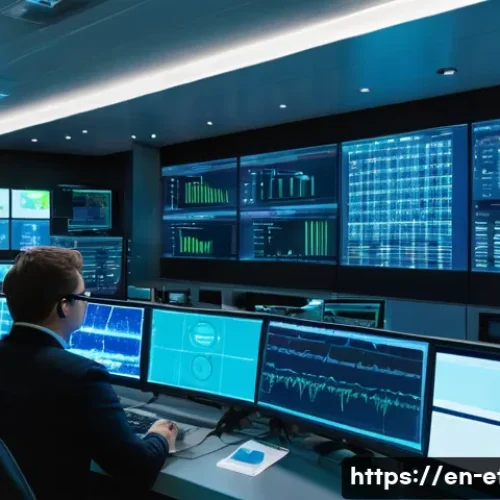
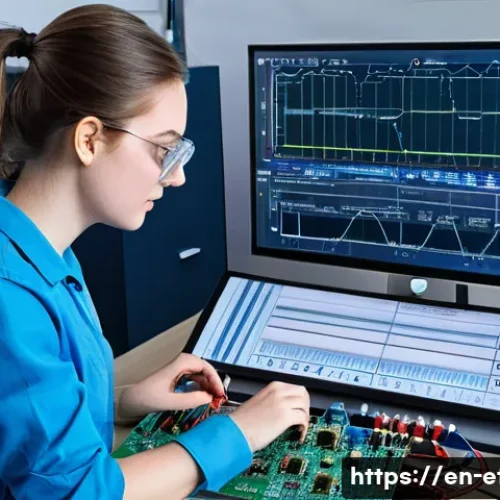
A professional, diverse team of electrical engineers and IT specialists collaborating in a modern smart factory. They are fully clothed in modest, professional work uniforms with safety glasses. In the background, sleek automated production lines with robotic arms and integrated sensor displays are visible. Subtle holographic data streams and network connections overlay the scene, illustrating the convergence of hardware and software. This image is safe for work, appropriate content, fully clothed, professional, perfect anatomy, correct proportions, natural pose, well-formed hands, proper finger count, natural body proportions, high-quality professional photography.

Remember when electrical engineering felt like a world apart from software development? I certainly do. My early days in the field involved circuits and schematics, while ‘IT’ was a separate department handling computers.

But honestly, looking around today, that clear line has blurred into an exciting, almost dizzying, fusion. It’s not just about integrating a chip here or a sensor there; we’re talking about entire ecosystems where smart grids communicate with renewable energy sources, autonomous vehicles navigate complex environments thanks to embedded AI, and industrial systems predict maintenance needs with unprecedented accuracy.

This convergence isn’t just a buzzword; it’s the fundamental shift driving innovation, creating new challenges in cybersecurity for connected devices, and demanding a completely new skill set from professionals.

From optimizing energy consumption in our smart homes to managing vast data centers powering AI models, electrical engineering principles are now inextricably linked with cutting-edge IT.

I’ve personally witnessed how this blend pushes boundaries, offering incredible opportunities for those ready to embrace both worlds. How exactly are these two colossal fields intertwining to shape our future?

Let’s delve into the specifics below.

The Foundation of Modern Systems: Embedded Intelligence and the Internet of Things

untapped - 이미지 1

The sheer complexity of modern technology is mind-boggling, isn’t it? When I first started working with microcontrollers, they felt like self-contained worlds, tasked with very specific, often isolated functions.

But now, it’s like every tiny sensor and actuator wants to talk to a cloud server, analyze data, and make real-time decisions. This isn’t just an evolution; it’s a revolution driven by the profound blending of electrical engineering’s hardware mastery and IT’s software prowess.

We’re embedding processing power and connectivity into literally everything, turning mundane objects into intelligent, interconnected nodes. I recall a time when setting up a simple network for a handful of computers felt like a monumental task.

Fast forward to today, and we’re effortlessly managing hundreds, if not thousands, of IoT devices in a single smart home or industrial facility. The challenges shifted from making a single chip perform a task to ensuring a distributed network of chips communicates seamlessly and securely, often across vast distances and in harsh environments.

It’s an exciting, sometimes daunting, landscape where the precision of electrical design meets the agility of software deployment.

1. From Isolated Circuits to Connected Ecosystems

My early work often involved designing circuits that did exactly one thing, perfectly. Think about a simple temperature sensor that just reported a reading.

Now, that same sensor is part of a larger ecosystem, perhaps controlling a thermostat, sending data to a cloud for long-term climate analysis, and even interacting with a smart window system.

This transition from standalone devices to deeply integrated systems is where the true magic happens. Electrical engineers lay the groundwork, building the robust, power-efficient hardware, while IT professionals develop the protocols, applications, and cloud infrastructure that allow these devices to communicate, process data, and deliver actionable insights.

I’ve personally seen companies struggle when their EE and IT teams work in silos, only to flourish once they realize they are two sides of the same coin, each indispensable for creating a truly smart, connected product.

It’s not enough for a device to just *work* anymore; it needs to connect, communicate, and learn.

2. Edge Computing: Bridging the Physical and Digital Worlds

The rise of edge computing really highlights this convergence for me. Gone are the days when all data had to travel back to a central server for processing.

Imagine an autonomous vehicle, for instance. It can’t afford the latency of sending all its sensor data to a distant cloud for every split-second decision.

This is where electrical engineers design robust, low-power processing units that live right at the ‘edge’ of the network – in the vehicle itself, in a factory sensor, or even on a smart streetlight.

IT then steps in to develop the sophisticated algorithms and machine learning models that run on these edge devices, enabling real-time analytics and decision-making.

My own experience building some of these smaller, localized processing units has shown me how critical it is to optimize both the hardware for energy efficiency and the software for speed and minimal resource usage.

It’s a delicate dance between making the hardware capable and the software efficient, where every nanosecond and every milliampere counts.

Powering the Digital Age: Energy Management and Data Centers

When I think about the backbone of our digital world, it’s not just about silicon and code; it’s profoundly about power – how we generate it, distribute it, and manage its consumption.

Data centers, the very engines of the internet, are monstrous consumers of electricity, and optimizing their energy footprint is no longer just a nice-to-have; it’s a critical imperative.

This is where the old-school principles of electrical engineering, focusing on power delivery and efficiency, collide head-on with cutting-edge IT, which demands massive computational power and uptime.

I’ve walked through data centers where the sheer scale of the power infrastructure, from massive transformers to intricate cooling systems, is breathtaking.

It’s a constant battle against heat and inefficiency, and every Watt saved has a ripple effect on operational costs and environmental impact. The synergy required to design, build, and maintain these digital fortresses truly exemplifies the EE/IT convergence, where a failure in one domain instantly impacts the other.

1. Smart Grids and Renewable Energy Integration

Remember when electricity just… came from the wall? Now, we’re talking about dynamic smart grids that not only distribute power but also integrate diverse sources like solar and wind, all while optimizing supply and demand in real-time.

This isn’t just an electrical engineering feat; it’s an IT masterpiece. Electrical engineers design the grid infrastructure, the power electronics, and the control systems, but it’s IT that develops the sophisticated algorithms for demand forecasting, dynamic pricing, fault detection, and seamless integration of intermittent renewables.

I’ve personally consulted on projects where ensuring grid stability with a high penetration of solar required incredibly intelligent software systems to predict weather patterns and adjust power flow, a task impossible without deep collaboration between power systems engineers and data scientists.

It’s a high-stakes game where system stability relies on the perfect marriage of hardware robustness and software intelligence.

2. Data Center Efficiency and Sustainable Computing

My visits to state-of-the-art data centers have really opened my eyes to the incredible challenges and innovations in energy management. These facilities aren’t just rows of servers; they’re intricate ecosystems where power delivery, cooling, and network infrastructure are meticulously orchestrated.

Electrical engineers design the ultra-efficient power distribution units (PDUs), redundant power supplies, and highly effective cooling mechanisms. But then, IT engineers step in to implement sophisticated power management software, dynamic workload balancing, and even AI-driven cooling systems that respond to real-time temperature fluctuations and server loads.

I’ve witnessed how small tweaks in software configurations can lead to significant energy savings across thousands of servers. The push for sustainable computing, driven by both economic and environmental pressures, is making this convergence more critical than ever.

It’s about designing a system from the ground up that is inherently efficient, from the power outlet to the processor core.

Driving Tomorrow: Autonomous Systems and Smart Transportation

The dream of self-driving cars, drone deliveries, and smart city traffic management isn’t some distant sci-fi fantasy anymore; it’s rapidly becoming our reality.

And honestly, it’s thrilling to see how deeply intertwined electrical engineering and IT are in bringing these visions to life. It’s not just about a car driving itself; it’s about a vehicle understanding its environment, communicating with other vehicles and infrastructure, and making lightning-fast decisions based on complex data streams.

My early work with sensor arrays, while rudimentary compared to today’s LiDAR or radar systems, laid the groundwork for understanding how physical inputs translate into actionable data.

Today, it’s mind-blowing to think about the sheer volume of data being processed in real-time by a single autonomous vehicle, all while ensuring absolute safety and reliability.

1. Sensor Fusion and Real-time Decision Making

When you think about an autonomous vehicle navigating a busy city street, it’s an orchestra of sensors working in perfect harmony: cameras, radar, LiDAR, ultrasonic sensors.

Electrical engineers are responsible for designing these incredibly precise and robust sensors, ensuring they can withstand varying weather conditions and accurately capture the physical world.

But that’s only half the story. IT professionals then develop the sophisticated sensor fusion algorithms that combine data from all these disparate sources, creating a comprehensive, real-time understanding of the vehicle’s surroundings.

I’ve seen demonstrations where a single faulty sensor reading, if not corrected by intelligent fusion software, could lead to disastrous outcomes. It’s a powerful example of how hardware precision meets software intelligence, forming the critical brain of an autonomous system.

This is a field where tiny design flaws in the electrical components can cascade into massive software debugging nightmares, a lesson I’ve learned firsthand.

2. Vehicle-to-Everything (V2X) Communication

The future of transportation isn’t just about individual autonomous vehicles; it’s about an interconnected network. Vehicle-to-everything (V2X) communication, including V2V (vehicle-to-vehicle) and V2I (vehicle-to-infrastructure), is where this truly shines.

Electrical engineers design the robust wireless communication modules and antenna systems that allow vehicles to talk to each other, to traffic lights, and even to pedestrians’ smartphones.

Meanwhile, IT specialists develop the communication protocols, network architectures, and cybersecurity measures to ensure these massive data exchanges are secure, low-latency, and reliable.

I vividly remember the excitement, and admittedly, some trepidation, during early tests of V2V systems. The potential for reducing traffic congestion and preventing accidents through shared information is immense, but so are the engineering challenges in making it foolproof and universally compatible.

It’s a complex, multi-layered problem that absolutely requires both EE and IT expertise.

Securing the Interconnected World: Cybersecurity in EE/IT Fusion

As our world becomes increasingly connected, the flip side of all this amazing innovation is the terrifying prospect of cybersecurity vulnerabilities.

It’s not just about protecting your personal data anymore; it’s about securing physical infrastructure, critical national assets, and even our lives. When electrical systems become digital and network-accessible, they inherit all the vulnerabilities of the IT world, plus a few new ones.

My early focus was on physical security of equipment, but now, a malicious line of code can cause more damage than a physical intruder ever could. This isn’t just about patching software; it’s about designing security into the very silicon and circuitry from day one.

I’ve personally seen how a seemingly minor flaw in a device’s firmware, designed by an electrical engineer, could be exploited by an IT-savvy hacker to compromise an entire industrial control system.

The stakes are incredibly high.

1. Protecting Industrial Control Systems (ICS) and SCADA

Industrial control systems (ICS) and SCADA (Supervisory Control and Data Acquisition) networks are the brains of our factories, power plants, and water treatment facilities.

Traditionally, these were isolated, “air-gapped” systems, but the drive for efficiency and remote management has pulled them onto the network. This convergence presents a massive cybersecurity challenge.

Electrical engineers design the programmable logic controllers (PLCs) and remote terminal units (RTUs) that interface with physical processes, ensuring their robustness and reliability.

Then, IT and cybersecurity experts come in to secure the communication protocols, implement intrusion detection systems, and develop incident response plans for these highly specialized networks.

I recall working on a project where we had to retrofit legacy industrial equipment with modern security measures, a truly daunting task that required a deep understanding of both the hardware’s limitations and the network’s vulnerabilities.

It’s a continuous, evolving battle.

2. Hardware-level Security and Cryptography

The most robust cybersecurity begins not with software, but with hardware. This is where electrical engineers play a pivotal role in designing chips and devices with built-in security features, such as hardware root-of-trust, secure boot mechanisms, and tamper-proof memory.

These features create a foundational layer of defense that software alone cannot achieve. IT security specialists then leverage these hardware capabilities by developing cryptographic algorithms, secure key management systems, and authentication protocols that run on top of this secure hardware.

I remember the excitement when hardware-accelerated encryption first became commonplace; it wasn’t just faster, it was fundamentally more secure. Protecting intellectual property, sensitive data, and operational integrity from the ground up requires a seamless integration of secure hardware design and sophisticated software implementation.

It’s truly a testament to the power of convergence.

Revolutionizing Industries: Smart Manufacturing and Predictive Maintenance

The factory floor of today is light-years ahead of what it was even a decade ago. It’s no longer just about assembly lines and manual labor; it’s about hyper-efficient, data-driven operations.

This transformation, often called Industry 4.0, is another prime example of electrical engineering and IT truly becoming one. I’ve personally walked through facilities where robots collaborate with human workers, where machines autonomously order their own replacement parts, and where product quality is monitored in real-time through a myriad of sensors.

The blend of robust electrical machinery with intelligent software analytics is truly breathtaking. It’s not just about automating tasks; it’s about optimizing entire processes, from raw material to finished product, with unprecedented precision and efficiency.

1. Automated Production Lines and Robotics

Modern manufacturing relies heavily on sophisticated automation. Electrical engineers are the architects of the robotic systems, designing the precise motor controls, power delivery, and sensor feedback loops that allow industrial robots to perform complex tasks with incredible accuracy and repeatability.

But these robots aren’t just mindless machines; they are often connected to a central IT system, receiving instructions, reporting their status, and even learning from their environment.

IT professionals develop the robotic control software, the programming interfaces, and the communication protocols that enable these automated lines to operate seamlessly.

I’ve seen factories where the sheer integration of these systems, from a single robotic arm to an entire production facility, is a marvel of both electrical and software engineering.

My experience tells me that optimizing a robot’s physical movement is just as crucial as optimizing the code that tells it what to do.

2. Predictive Maintenance and Digital Twins

One of the most impactful innovations I’ve observed is predictive maintenance. Gone are the days of rigid, time-based maintenance schedules. Now, sensors embedded in machinery – thanks to electrical engineering – continuously monitor performance, temperature, vibration, and other parameters.

This data is then streamed to IT systems, which employ machine learning algorithms to analyze patterns and predict potential equipment failures *before* they occur.

This dramatically reduces downtime and extends equipment lifespan. Furthermore, the concept of ‘digital twins’ – virtual replicas of physical assets – is gaining traction.

Electrical engineers help define the parameters and real-world data feeds for these digital twins, while IT specialists build the simulation models and visualization tools.

I’ve seen this in action, where a digital twin of a complex industrial pump could predict a bearing failure weeks in advance, allowing for proactive maintenance and avoiding catastrophic shutdowns.

It’s a game-changer, powered by the perfect synthesis of hardware data collection and software intelligence.

Aspect of Convergence Traditional EE Role Focus Traditional IT Role Focus Converged EE/IT Role Focus
Device Connectivity Circuit design, power delivery, physical interfaces Network protocols, software stacks, data management Designing connected hardware, implementing secure embedded software, optimizing edge processing
System Intelligence Control loops, signal processing, analog design Algorithm development, data analytics, AI/ML models Integrating intelligent sensors, developing real-time control algorithms, optimizing resource usage for AI at the edge
Energy Management Power electronics, grid infrastructure, motor control Server optimization, virtualization, cloud resource allocation Designing smart grids, optimizing data center power, developing sustainable energy solutions through smart control
Cybersecurity Physical security, hardware tamper resistance Network security, software vulnerabilities, data encryption Implementing hardware-level security, secure boot, firmware integrity, defending industrial control systems
Innovation Driver Miniaturization, efficiency, component performance Scalability, data processing, user experience Developing autonomous systems, IoT ecosystems, smart cities, and next-gen industrial automation

The Human Element: Bridging the Skill Gap for a Hybrid Future

All this talk about technology is exciting, but it often makes me wonder about the people behind it all. The truth is, the skill sets that were once distinct are now blending, and professionals in both fields are increasingly needing to speak each other’s language.

I remember teaching a basic programming course to a group of electrical engineering students, and at first, there was resistance – “That’s an IT thing!” they’d say.

But as they started to see how software could unlock the true potential of their hardware designs, their excitement grew. This isn’t about one field subsuming the other; it’s about mutual respect, collaboration, and continuous learning.

The demand for “hybrid” professionals who understand both the electrons and the bits is skyrocketing, and frankly, it’s a fantastic career opportunity for those willing to embrace the challenge.

1. The Rise of the “Full-Stack Engineer” (Hardware & Software)

We often hear about full-stack developers in the IT world, but in the realm of EE/IT convergence, we’re seeing the rise of a truly unique “full-stack engineer” who understands both the physical and the digital layers.

These are the individuals who can design a custom PCB, write the firmware for its microcontroller, develop the embedded software applications, and then even contribute to the cloud infrastructure that interacts with the device.

My own journey has naturally led me to dabble in both realms, and I’ve found that having a holistic view drastically improves problem-solving. When you understand why a particular piece of hardware behaves a certain way, it informs your software design, and vice versa.

It’s a challenging but incredibly rewarding path, demanding versatility and a relentless curiosity about how things work, from the atom up to the network.

2. Interdisciplinary Collaboration and Education

For this convergence to truly flourish, we need more than just individual expertise; we need seamless interdisciplinary collaboration. Universities are starting to offer combined EE and Computer Science programs, which is a fantastic step.

But it’s also about fostering a culture of teamwork within companies, encouraging EE teams to sit with IT teams, and vice versa, breaking down those traditional silos.

I’ve personally seen projects stall because of a lack of communication between hardware and software teams, only to accelerate dramatically once they started holding joint brainstorming sessions.

Continuous education is paramount here; electrical engineers need to learn about cloud computing and cybersecurity, while IT professionals need a deeper appreciation for power electronics and embedded systems.

It’s a shared journey, and the future literally depends on our ability to work together to solve these increasingly complex, interconnected problems.

Conclusion

As I reflect on the incredible journey of technology, it’s profoundly clear that the traditional boundaries between electrical engineering and information technology have largely dissolved.

This isn’t just a fleeting trend; it’s the very foundation upon which our interconnected, intelligent future is being built. From smart homes to autonomous systems, every breakthrough relies on the seamless interplay of robust hardware and intelligent software.

Embracing this convergence isn’t just about adapting; it’s about pioneering the next era of innovation, where those who understand both the electrons and the bits will truly lead the way.

Useful Resources

1. Explore Interdisciplinary Online Courses: Look for platforms like Coursera, edX, or Udacity that offer programs blending electrical engineering, computer science, and data analytics. Many universities are now creating specific “IoT” or “Embedded Systems” tracks that perfectly bridge this gap.

2. Join Relevant Professional Organizations: Consider groups like the IEEE (Institute of Electrical and Electronics Engineers), ACM (Association for Computing Machinery), or specialized IoT/AI industry alliances. These often host webinars, conferences, and provide networking opportunities to meet hybrid professionals.

3. Get Hands-On with Open-Source Hardware/Software: Dive into projects using platforms like Arduino, Raspberry Pi, or ESP32. Experiment with writing code for sensors, connecting devices to cloud services (like AWS IoT or Azure IoT Hub), and building small-scale smart systems. Practical experience truly solidifies theoretical knowledge.

4. Follow Industry Leaders and Publications: Stay updated by subscribing to tech journals, blogs, and podcasts that focus on Industry 4.0, autonomous systems, smart grids, and cybersecurity. Keeping abreast of the latest innovations is crucial in this fast-evolving landscape.

5. Cultivate a “Full-Stack” Mindset: Whether your background is EE or IT, consciously seek opportunities to learn about the other domain. For EEs, that might mean understanding Python for data analysis; for IT pros, it could be grasping basic circuit diagrams or microcontrollers. Embrace continuous learning and cross-functional curiosity!

Key Takeaways

The profound convergence of Electrical Engineering (EE) and Information Technology (IT) is no longer a theoretical concept but the active force shaping our modern world. It’s driving innovation across every sector, from intelligent everyday objects and sustainable energy grids to autonomous transportation and hyper-efficient manufacturing. This blending creates incredibly complex yet powerful systems, demanding a new generation of “full-stack” professionals who grasp both the intricacies of hardware design and the agility of software development. Ultimately, successful future solutions will hinge on seamless interdisciplinary collaboration and a continuous commitment to learning across these traditionally separate domains.

Frequently Asked Questions (FAQ) 📖

Q: You mentioned this convergence demands a completely new skill set. What specific challenges or areas do professionals need to focus on to thrive in this blended landscape?

A: Honestly, it feels like we’re constantly juggling. The biggest hurdle I’ve seen, and something I grapple with daily, is bridging the “language barrier” between hardware and software.
It’s no longer enough to just understand circuit diagrams; you need to grasp how your code will actually perform on that physical silicon, or how a sensor’s data integrity impacts an AI model’s accuracy.
Cybersecurity, for instance, is a nightmare. Before, you worried about network breaches; now, it’s about protecting every tiny connected device from an attack that could literally shut down a power grid.
It means professionals need a genuine knack for both physical layer understanding and robust software development, plus a keen eye for security vulnerabilities across the entire stack.
Forget just coding; you need to think about the electrons and the algorithms.

Q: You gave a few examples like smart grids. Can you elaborate on other everyday scenarios where this electrical engineering-IT fusion is really making a difference?

A: Oh, absolutely! Think about something as mundane as your smart thermostat – it’s not just a fancy switch. That little device uses algorithms to learn your habits, optimize energy use based on real-time weather data, and communicates wirelessly with the grid to potentially defer energy-intensive tasks during peak hours.
That’s EE and IT playing together beautifully. Or, consider modern manufacturing: factory floors are bristling with sensors that monitor machine health.
This isn’t just about a red light blinking; it’s about real-time data streaming into predictive maintenance systems that use AI to tell you, “Hey, that bearing is going to fail in three weeks, let’s schedule maintenance now.” I’ve seen companies save millions by avoiding unexpected downtime because of this kind of intelligent integration.
It’s about making our physical world smarter, more efficient, and often, much safer.

Q: It sounds like a complex but exciting shift. What kind of opportunities does this convergence open up for individuals and for the future of various industries?

A: For me, it feels like stepping into a whole new world of possibilities, almost like the wild west of innovation. For individuals, if you’re someone who loves problem-solving and isn’t afraid to get your hands dirty in both the digital and physical realms, the opportunities are endless.
We’re seeing huge demand for “full-stack engineers” who can design a circuit board and write the firmware, or data scientists who understand sensor physics.
Entire new industries are emerging – think personalized healthcare devices, advanced robotics, even urban planning that integrates smart infrastructure from the ground up.
The future? I genuinely believe this fusion is the key to tackling some of humanity’s biggest challenges, from climate change (optimizing renewable energy distribution) to resource scarcity (smart agriculture).
It’s not just about building better gadgets; it’s about building a better, smarter, more resilient world.